
Top 4 Popular Posts
Lifting
Ultherapy vs. ONDA Lifting: Price, Effects, and Pain Compared
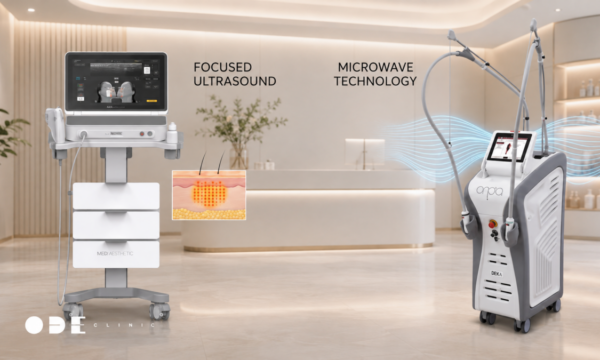
"Doctor, my jawline has gone blunt and saggy. Should I have Ultherapy, or ONDA?"I don't think a week goes by without that question.Search it and you mostly get "Ultherapy is stronger," which doesn't help much.What you actually want to know is which one fits your face.The similar pricing doesn't make it easier.In Gangnam, Ultherapy runs KRW 1,200,000–1,500,000 for 300 shots,and ONDA Lifting KRW 1,500,000–2,000,000 for three sessions of 100,000J.Both get recommended for the same areas too — jawline, double chin.But the two devices are doing very different jobs.Ultherapy contracts the SMAS layer with ultrasound.ONDA Lifting (ONDA Coolwaves) breaks down subcutaneous fat with microwaves.Different layers, different goals.Here's what several years of performing both in Gangnam has taught me.Written directly by Dr. Kim Do-hoon, Medical Director of ODE ClinicUltherapy vs ONDA Lifting: The Core DifferencesLet me put the conclusion in a table first.CategoryUltherapyONDA LiftingMechanismHigh-intensity focused ultrasound (HIFU)MicrowaveTarget layerSubcutaneous fat layer, SMAS layerConcentrated in the subcutaneous fat layerMain purposeContraction of sagging structures, liftingFat reduction, volume reductionRecommended areasJawline, double chinJawline, double chinPain (out of 10)7–8Around 3DowntimeSwelling for 1–2 weeksAlmost noneOnset of effectFrom 2 weeks up to 3 monthsGradually over 1 monthRecommended frequencyOnce every 6–12 months3 sessions at 1-month intervalsPrice300 shots, KRW 1,200,000–1,500,000100,000J × 3, KRW 1,500,000–2,000,000Read on its own, that table can make the two look interchangeable.Look closer, though, and the distinctions that actually decide the choice start to surface.I'll take them one at a time below.Ultherapy: Effects and MechanismDepth is what sets Ultherapy apart from everything else in the category.Through 3.0mm and 4.5mm cartridges, energy travels all the way down to the SMAS layer,which sits between the subcutaneous fat and the muscle.That's the same layer plastic surgeons pull upward during a facelift.The name itself is a compound — ultrasound plus therapy.In other words, a lifting device running on high-intensity focused ultrasound.Focus that energy on a single point and the temperature there climbs to roughly 60–70℃.A microscopic injury forms, known as a thermal coagulation point.Fibroblasts wake up around it, and new collagen follows.Not Lifted Up — Re-AdheredA lot of patients picture Ultherapy pulling tissue upward the way thread lifting does.The mechanism is different.What actually happens is that the sagging SMAS layer and fibrous septa contract,so tissue that had drooped re-adheres to where it originally sat.The limitations are just as real.Since the energy also passes through the subcutaneous fat layer,patients who had little cheek volume to start with can end up with hollowing.Lifted, but gaunt — that's the outcome nobody wants.Which is why deciding what to avoid, during the design stage, matters as much as deciding where to treat.ONDA Lifting: Effects and MechanismONDA goes after fat cells selectively.Microwaves are absorbed more readily by tissue holding few water molecules and plenty of lipids.So heat concentrates in the subcutaneous fat layer, the fat cell membrane takes damage, and cell death follows.The device itself runs microwaves in the 2.45GHz band.DEKA of Italy developed it, and it also goes by the name Coolwaves.One thing worth knowing: the broken-down fat doesn't vanish on the spot.It clears gradually through metabolic processes over roughly a month.That's why a photograph taken a month later shows more change than one taken right after the session.Thermal stimulation reaches the dermis at the same time, so some collagen regeneration comes along with it.Fat down, firmness up — both at once.Where ONDA Lifting Runs Out(1) Area selection isn't precise.The handpiece works in a rubbing motion, so selectively avoiding a spot like the anterior cheek— which can hollow out — is difficult.Narrow areas such as the nasolabial fold need caution too, since the surrounding region can lose volume.(2) One session usually isn't enough.Fat cell death scales with the number of sessions.Which is why three sessions at one-month intervals is the general recommendation.(3) It doesn't fix sagging itself.ONDA was never built to target the SMAS layer.The jawline gets tidied indirectly, as weight comes off.Ultherapy and ONDA Lifting: Pain and DowntimeThis is where the experience diverges most sharply.CategoryUltherapyONDA LiftingType of painDeep, sharp painA sensation of warmingPain intensity7–8 out of 10Around 3AnesthesiaTopical anesthetic, nerve blockMostly performed without anesthesiaSwellingMarked swelling for 1 week, residual swelling up to 2 weeksAlmost noneReturn to daily lifePossible same day, though swelling persistsImmediately after the procedureThe worst of the Ultherapy pain sits along the jawline, where bone lies close to the surface.Most patients still tell me afterward that it was more manageable than they'd braced for.The swelling deserves a heads-up.It starts the day after, and because the jawline puffs up, there's a stretch where the face can look more sagged than it did before treatment.Only once that settles at around two weeks does the jawline improvement show itself.ONDA carries almost none of this.Plenty of patients drop in over a lunch break and head back to work.If a wedding, an interview, or a presentation is close at hand, ONDA is the safer bet.Ultherapy and ONDA Lifting Price ComparisonGangnam pricing below.ProcedurePriceUltherapy 100 shotsApprox. KRW 400,000–500,000Ultherapy 300 shotsApprox. KRW 1,200,000–1,500,000ONDA Lifting 100,000J × 1Approx. KRW 700,000ONDA Lifting 100,000J × 3Approx. KRW 1,500,000–2,000,000Compare single sessions and Ultherapy looks like the expensive one.Factor in the treatment interval, though, and the picture shifts.A single ONDA session is unlikely to move the needle as far as Ultherapy does, so three sessions is the realistic standard.That puts you at KRW 1,500,000–2,000,000.Ultherapy, meanwhile, holds with one session every six months at the shortest, once a year at the longest.Convert it to an annual basis and the gap between the two turns out to be smaller than it first appears.Ultherapy and ONDA Lifting: Who Each One SuitsPatients for whom Ultherapy is recommended Those who need precise shot distribution (marked sagging at the front of the face, pronounced left-right asymmetry, and similar cases) Those who want a definite change and are willing to accept pain and swelling Those who would prefer to reduce the number of visits to roughly once a year Patients for whom ONDA Lifting is recommended Those with a thick fat layer Those who have postponed lifting because of pain and downtime Those with an important event within 2–4 weeks Those undergoing lifting for the first time who would like to begin with something less demanding In practice, the choice often isn't limited to one of the two.Some patients arrive with both a thick fat layer and progressed sagging.For them, the sequence I recommend is ONDA first to take the weight off, then Ultherapy to set the structure.Combining procedures with different mechanisms also tends to stretch the result out longer.Even among lifting devices aimed at the same goal, the underlying mechanisms often differ.Repeating one procedure over and over is rarely the best long-term plan.Actual Ultherapy and ONDA Lifting Before and After PhotosCASE 1. Female in her 30s (Ultherapy 300 shots)Left: January 13, 2025Right: December 29, 2025Cheek hollowing and sagging were both present here.Patients with hollowing often assume Ultherapy is bound to make things worse,but working around the hollowed areas isn't a problem.And since Ultherapy allows more precise work than ONDA,it's actually the option I'd recommend for a case like this.The same goes for pronounced left-right asymmetry.Ultherapy lets shots be distributed exactly as intended, which puts it ahead of ONDA and its rubbing motion.CASE 2. Female in her 20s (ONDA Lifting 100,000J, before and after)Left: January 13, 2025Right: June 20, 2025Ultherapy and ONDA Lifting FAQQ. Can Ultherapy and ONDA Lifting be received together?A. They can, and it's a pairing I recommend.The layers and mechanisms involved are different.Having both on the same day is fine too.Q. Cheek hollowing is a concern — which procedure carries more risk?A. It can occur with either one.That said, it's manageable: identify the hollowed areas during the design stage and work around them.Q. Why are three ONDA Lifting sessions recommended?A. There's a limit to how many fat cells any single session destroys.Change tends to read more clearly when three sessions are done at one-month intervals.Three isn't strictly required for an effect to appear, though — first-time patients can have one session and decide from there.Q. Does swelling always occur with Ultherapy?A. It varies between individuals, but it shows up in a considerable proportion of patients.Starting the following day, marked swelling can last a week, with residual swelling up to two weeks.Cold compresses can suppress the regenerative process, so I generally don't recommend them.Q. Are both procedures effective for nasolabial folds?A. The midface, nasolabial folds included, isn't where either procedure is strongest.If nasolabial folds are your main concern, XERF, EMFACE, or Alltite are worth looking at first.Q. For a first lifting procedure, which is the better starting point?A. If the pain and swelling are acceptable to you, I'd start with Ultherapy.It produces a more dramatic result in a lot of cases.And if that alone brings enough improvement, there's no need to add ONDA at all.In ClosingUltherapy and ONDA are both lifting procedures that sharpen the jawline.Today's column ran through the mechanisms, effects, pain, and price — and a number of real differences sit between them.What matters most, though, is talking it through with the physician who'll be performing the treatment and choosing what matches your own condition. Thank you for reading — Dr. Kim Do-hoon, ODE Clinic.Gangnam Dermatology Clinic, ODE Clinic8th Floor, 340 Gangnam-daero, Gangnam-gu, Seoul, Korea+82–2–569–0222ODE Column : Ultherapy vs. ONDA LiftingAuthor: Dr. Dohoon Kim, Chief Director of ODE ClinicSpecialty: Anti-aging (Lifting, Volumizing, etc.)
2026.08.25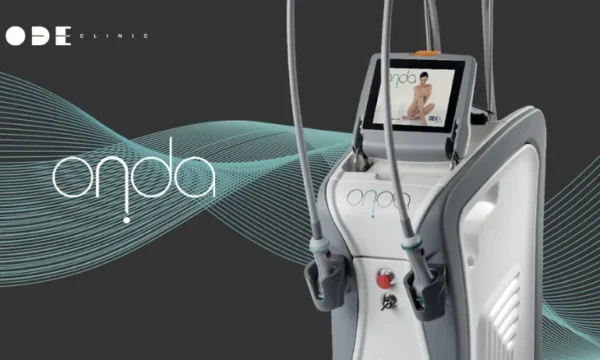
Lifting
Onda Body Contouring in Korea: Sessions, Joules, and What It Costs
Diet is dialled in, the gym is happening, and the lower abdomen and flanks still haven't moved.I hear that a lot.Onda body contouring is aimed squarely at that kind of stubborn, localized fat.It's non-invasive, and it uses 2.45 GHz microwaves to selectively heat the subcutaneous fat layer — going after localized fat, cellulite, and skin laxity in one go.Cost in the Gangnam district runs roughly KRW 500,000 to 1,200,000 per area per session, excluding VAT.That range moves with the size of the area treated, the joule count applied, and how many sessions you end up needing.ODE Clinic has been doing lifting, tightening, and body contouring since 2022.As of 2026, our returning patient count is past 6,000.Below: how Onda actually works, who it suits, how joule settings get decided, how many sessions you should plan for, and what it costs by area.What Onda Body Contouring Is(1) Microwaves, not radiofrequencyConcentrating heat in the fat layer without burning the skin surface — that's what Onda is built to do.The frequency is what makes it possible.At 2.45 GHz, the electrical conductivity of the skin surface is low enough that energy passes through the epidermis with barely any absorption.Manufacturer data puts roughly 80% of the delivered energy into the subcutaneous fat layer,with the remaining 20% staying in the epidermis and dermis. (Source: DEKA)The device itself came out of DEKA in Florence, Italy.It delivers those 2.45 GHz microwaves under the Coolwaves name.How it generates heat also separates it from conventional radiofrequency.RF passes a current through tissue and works off the resistive heat that follows.Onda uses dielectric heating instead — the energy agitates molecules within the tissue directly, and the friction produces the heat.(2) Three things happen at onceFat reductionHeated adipocytes sustain membrane damage and release their contents.The lymphatic system clears those contents over the following weeks.Cellulite improvementHeat reaches the fibrous septa anchoring the fat lobules.That's what softens the dimpled surface appearance.Skin tighteningCollagen fibres in the dermis contract immediately, and new collagen forms behind them.The point is keeping skin firm where fat volume has just come out.(3) Handpiece depth decides the targetHandpieceDepth of actionPrimary targetDeepDeep (approx. 7 mm)Localized fat (abdomen, thighs, flanks)ShallowSuperficial (approx. 3 mm)Cellulite, skin laxity, submental areaWith fibrotic cellulite, sequence matters.A 2024 international advisory board paper recommends one to two opening sessions on the Shallow handpiece before moving to Deep.Go straight to Deep where there's considerable subcutaneous fibrosis and that fibrotic tissue acts as a shield, cutting energy transfer. (Source: Bioengineering, 2024)Cellulite that far along isn't something we see often, mind you.Who Onda Body Contouring Suits Those with stubborn lower abdominal or flank fat that persists despite diet and exercise Those with laxity and loss of firmness on the inner upper arms Those concerned about dimpled, orange-peel texture on the posterior thighs Those whose skin has loosened following weight loss, leaving the contour undefined Those experiencing reduced abdominal firmness after pregnancy Those who want to maintain their routine without downtime One thing to be clear about up front.Onda body contouring is not a weight loss procedure.The target is circumference, contour, and surface texture — not the number on the scale.It doesn't act on visceral fat, and patients with a higher body mass index tend to find the results less satisfying.Timing is worth setting expectations on too.Straight after the session, most patients notice nothing beyond a sensation of tightness.Measurable circumference change generally starts showing from two to four weeks onward.Released fat content needs time to clear metabolically, and collagen needs time to remodel.The most visible result usually lands around three months after the final session.How Joule Settings Get DecidedPricing in Korea generally runs by joule count.One joule is the standard unit of energy, and 10,000 joules equals 10 kJ.(1) Surface area comes firstThe international advisory board recommendations describe dividing the treatment zoneinto subareas of roughly 15 × 15 cm and working through them in sequence.Bigger area, proportionally higher joule count. Straightforward enough.(2) Fat thickness and tissue density come secondA thicker fat layer needs more energy to reach the thermal threshold.Thin areas work the other way.Deliver the same joule count to somewhere like the upper arm and you get more discomfort without a matching gain in result.Which is why the treating physician should palpate the area beforehand.Fat thickness, dermal elasticity, how firm any cellulite banding feels — all of it needs checking by hand.(3) Recommended joules by areaAreaRecommended joules (per session)Full abdomen100,000–200,000 JFlanks (love handles)100,000 JUpper arms (both)100,000 JThighs (both)100,000–200,000 JSubmental (double chin)50,000–100,000 JPush past these ranges and the result doesn't scale with the energy.Settings within the ranges above are what we advise.Sessions and Treatment Intervals(1) Three to four sessions for body areasA single session rarely gets you to the target level of improvement.Thermal stimulation has to accumulate before adipocyte reduction and collagen remodelling happen to any meaningful degree.International clinical data and the manufacturer protocol both land on three to four sessions for body areas.Korean clinics commonly advise three or more, spaced three to four weeks apart.(2) Three to four weeks between sessionsThe interval exists because of clearance time.Contents released from damaged adipocytes need at least two to three weeks to drain through the lymphatic system.Deliver energy again before that finishes and you add tissue burden without materially improving the outcome.(3) Duration and booster sessionsAfter a three-session course, results tend to hold for roughly six months to a year.That figure swings considerably with weight management, diet, and activity level.Since the adipocyte count itself has come down, fat accumulates more slowly in the treated area.Not a free pass, though.If the remaining adipocytes enlarge, circumference can climb again.For maintenance, a single booster session at six to twelve months is the general recommendation.Onda Body Contouring Price in KoreaGangnam district pricing below. Korean won, excluding VAT.AreaPer sessionThree-session courseFull abdomenKRW 700,000–1,350,000KRW 1,800,000–3,500,000FlanksKRW 700,000KRW 1,800,000Upper arms (both)KRW 700,000KRW 1,800,000Thighs (both)KRW 700,000–1,350,000KRW 1,800,000–3,500,000Onda Body vs Other Body TreatmentsCategoryOnda bodyLipolytic injectionEMSCULPT NEOMechanismMicrowave (2.45 GHz)PharmacologicalRF + muscle stimulation (HIFEM)Fat reductionYesYesYesMuscle gainNoNoYesSkin tighteningYesNoYesCelluliteCan improveLimitedLimitedDiscomfortLowModerateLowDowntimeMinimalSwelling, bruisingMinimalSessions3–45 or more3–4I see a steady stream of patients who reduced circumference with lipolytic injections and then found the overlying skin had loosened.Take fat out with no tightening response behind it and the contour can end up looking less defined, not more.That's where Onda separates itself.Fat reduction and skin tightening arrive together.In my own view, pairing Onda body with EMSCULPT NEO is the most effective approach. Upper arms: Onda body + EMSCULPT NEO Abdomen: Onda body + EMSCULPT NEO Thighs: Onda body + EMSCULPT NEO Buttocks: EMSCULPT NEO aloneSide Effects and LimitationsOnda body contouring is regarded as relatively safe.That isn't the same as having no side effects.(1) Common reactionsTransient erythema at the treated site is the most common by far.One clinical study saw temporary redness in roughly 72 percent of subjects, resolving within hours in most cases.Some patients report a dull soreness for several days afterwards.Think delayed-onset muscle soreness after a hard session at the gym.(2) Uncommon but noteworthy side effectsWhere energy goes in excessively, or the handpiece dwells too long in one position, you can get surface burns, blistering, or localized fat depression.Which makes a consistent handpiece movement rate a matter of technique, not just settings.(3) Limitations of the evidenceOne point deserves a frank statement.The 2024 international advisory board paper itself notes that evaluation of this method's long-term efficacy and safety is still lacking.A one-year follow-up study published in 2023 was retracted in January 2026 over deficiencies in the peer review process.So the accurate way to understand Onda body contouring is this:short- and medium-term data is accumulating, but multi-year evidence isn't there yet.Frequently Asked QuestionsQ. Is one Onda body session enough to see results?A. For real improvement, three or more.That said, one session isn't nothing.Starting with a single session and deciding on more from there is perfectly reasonable.Q. Does Onda body contouring reduce body weight?A. The scale will barely move.This isn't weight loss — circumference and contour improve as adipocyte volume comes down.Onda also doesn't act on visceral fat.Q. Is more energy always better?A. No.Each area has an appropriate range, and past it the results stop scaling.Q. When can exercise or sauna use resume after treatment?A. Normal activity, same day.Vigorous exercise, hot saunas, and heavy drinking are best left alone for at least three days.Drinking plenty of water helps clear the released fat content, too.Q. Is Onda body the same device as facial Onda lifting?A. Same device, yes.The handpieces and parameters used may differ.Q. Can Onda body contouring improve severe cellulite?A. Improvement is possible.Where fibrosis is advanced, though, the sequence matters — one to two initial sessions on the shallow handpiece, then progress to the deep one.Skip that and energy delivery gets compromised.Closing RemarksWhen you're comparing Onda body contouring prices, the headline figure isn't the one that matters.What matters is how many joules go in, across what area.Same region, same price, and actual energy delivery can still differ by a factor of two.Worth repeating as well: this isn't a weight loss procedure.Satisfaction runs highest among patients who come to it for the residual localized fat and loosened skin left over after diet and exercise have done their part.Rather than deciding on your own, consult a treating physicianwho assesses fat thickness and skin quality directly and designs the joule plan around what they find.Thank you for reading — Dr. Kim Do-hoon, ODE Clinic.Gangnam Dermatology Clinic, ODE Clinic8th Floor, 340 Gangnam-daero, Gangnam-gu, Seoul, Korea+82–2–569–0222ODE Column : ONDA Body ContouringAuthor: Dr. Dohoon Kim, Chief Director of ODE ClinicSpecialty: Anti-aging (Lifting, Volumizing, etc.)
2026.08.25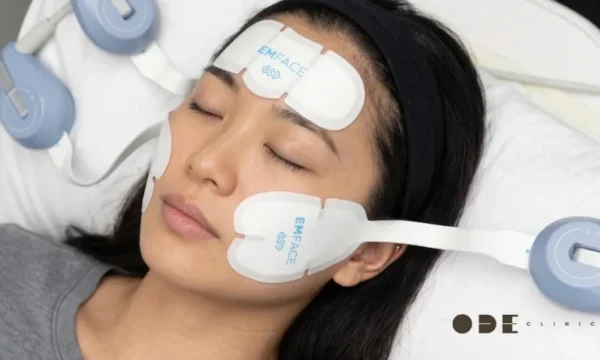
Lifting
EMFACE Lifting in Seoul: Do the Results and Duration Justify the Price?
Four EMFACE sessions in Gangnam: roughly KRW 2,000,000 to 3,000,000.That's about what a single Ultherapy or Thermage session runs.So the question comes up a lot — is the lifting actually substantial enough to warrant that?I suspect the format feeds the doubt.Nobody stands over you delivering energy by hand. The applicators go on and the treatment runs itself.The effect is there, though, and it's been demonstrated in objective measurements.Today I want to open up a 2025 study in Asian patients and go through it properly.How much lifting actually happens, how long it holds, where EMFACE and Ultherapy part ways, and how it fits alongside other midface work.※ For general information about the treatment, please refer to the column EMFACE lifting results, price and treatment duration.How EMFACE Lifting WorksTwo types of energy, delivered at the same time.(1) HIFES (High Intensity Facial Electrical Stimulation)The slackened muscle itself — that's what EMFACE goes after.Devices like Ultherapy and Thermage contract the skin, the retaining ligaments, and the fascial layer. EMFACE drops a layer below all of that.Facial muscle tone declines with age, and lower tone means the muscle sits slack even at rest.But not every facial muscle does the same job.Some pull tissue upward. Others drag it down.EMFACE strengthens only the elevators.The study spells this out too.The device induces contractions in the frontalis, the zygomaticus major and minor, and the risorius— at an intensity you simply cannot produce voluntarily.Applicator positions are laid out to steer clear of depressor muscles like the glabellar muscles and the masseter, which can make wrinkles worse.Hence the nickname, "midface lifting."As the zygomaticus major and minor grow stronger, the midface reads as visually shorter.(2) RF (Radiofrequency)Electromagnetic stimulation isn't all that comes out of the device. Radiofrequency does too.EMFACE runs its RF at 3.2 MHz.That's lower than the 6.78 MHz used by Thermage or Density.Lower frequency, deeper heat.Which is why the aim here is lifting at the level of the retaining ligaments and fascia rather than dermal tightening.The study reports dermal temperature hitting 40°C within the first two minutes.From there it's maintained up to 42.5°C.That heat denatures collagen fibers and stimulates fibroblasts, which leads to new collagen and elastin formation.Human histologic studies have confirmed a 30% increase in collagen and a 102.8% increase in elastin three months out.Source: Goldberg DJ, Lal K. Treatment With Synchronized Radiofrequency and Facial Muscle Stimulation: Histologic Analysis of Human Skin for Changes in Collagen and Elastin Fibers. Journal of Cosmetic Dermatology. 2024;23:1620-1628.EMFACE Results: The Actual FiguresThe study in question came out of Siriraj Hospital, Faculty of Medicine, Mahidol University in Thailand.Source: Manuskiatti W, et al. The Efficacy and Safety of Synchronized Radiofrequency and High Intensity Facial Electrical Stimulation in Improving Facial Skin Laxity and Quality in Asians. Lasers in Surgery and Medicine. 2025;57:177-186. https://doi.org/10.1002/lsm.23878There's a reason I reach for this one specifically.Every participant was Asian, and the results were tracked with 3D measurement equipment for six months after treatment.Fifteen participants, aged 40 to 65, with mild to moderate laxity.Four weekly sessions on the forehead and both cheeks, twenty minutes each, at 100% power.At ODE Clinic, most treatments run at 100% power as well.(1) Cheek liftingFrom 1.240 mm before treatment to 1.373 mm one month after the fourth session.(2) Forehead and eyebrow liftingForehead lifting climbed from 1.447 mm to 2.140 mm.The biggest mover was the eyebrow.Baseline of 21.56 mm rose to 22.95 mm at three months — an average elevation of 1.39 mm.(3) Skin firmness and textureSkin firmness (R0) had already improved 45.68% before the third session.By six months it reached 81.24%.Here's the interesting part: firmness kept climbing even while the lifting measurements were on their way down.Crow's feet improved 12.39% at three months and 10.70% at six.Forehead pore volume dropped 66.26% at six months.Contrary to a fairly common assumption, then,the lifting effect of EMFACE has been verified in objective measurements.And there are plenty of clinical studies beyond this one.The patient self-assessment is worth a look as well.At six months, 40% of participants rated their facial contour as more than 50% improved.Another 27% put it above 75%.Not one participant reported no visible improvement at all.EMFACE Duration: What the Six-Month Data ShowsThe most candid part of this study is the durability question.Earlier papers described results holding for roughly a year after four to six sessions.These findings tell a somewhat different story.Forehead lifting peaked at 2.140 mm one month after the fourth session.At six months: 0.673 mm.About one third of the peak.Cheek lifting followed the same curve, falling from 1.373 mm to 0.580 mm.So the measured lifting effect drops to roughly a third of its high point across six months.The eyebrow held onto 1.31 mm of elevation at the same time point, though.And skin firmness kept rising right through.Why would one part fade while another holds?Because the two energies behave differently.Muscle tone drifts back toward baseline once the stimulation stops.Collagen built by radiofrequency sticks around far longer.The study makes the point outright.Facial muscles are skeletal muscles like any other — they need consistent workload to hold tone, and they atrophy without it.Which puts EMFACE closer to periodic maintenance than a one-and-done procedure.Measured results peak somewhere between one and three months after the fourth session.If there's an important date on your calendar, work backward from that window.How EMFACE Differs From UltherapyThe most frequently asked question, by some margin.Both have "lifting" in the description. The layers they act on have almost nothing in common.Ultherapy uses high-intensity focused ultrasound (HIFU) to create thermal coagulation points at 3.0 mm or 4.5 mm.Heat concentrates at a single point above 60°C, and the tissue contracts hard.The primary target is the fascial (SMAS) layer.EMFACE goes deeper still, to the muscle layer.It isn't contracting tissue — it's restoring tone to slackened muscle so the upward pulling force comes back.CategoryUltherapyEMFACEEnergyFocused ultrasound (HIFU)Electromagnetic stimulation + RF (3.2 MHz)Target layerFascia (SMAS), subcutaneous fatMuscle layer, fascial layerMechanismTissue contraction via thermal coagulation pointsRestored muscle tone + collagen regenerationStrongest areaJawline, double chinEyebrows, midface, nasolabial foldsPainPresent (anesthesia recommended)MinimalDowntimeSwelling for 1–2 weeksMinimalNumber of sessions14–6 sessions, 7–10 days apartOnset of resultsClear at 2–3 months1–3 months after the fourth sessionCollapsed jawline and a double chin? Ultherapy is closer to the right answer.Heavy-feeling eye area with midface descent deepening the nasolabial folds? EMFACE.Each has its blind spots, too.Ultherapy does little for the nasolabial region, where there's no fascia to work with, or for the jowls, where nerves run.EMFACE lacks the power to lift heavy tissue below the jawline.So they aren't competitors. They cover for each other.I see plenty of patients arrive for EMFACE after Ultherapy, once the midface still feels unresolved.EMFACE PriceAround KRW 2,000,000 to 3,000,000 for four sessions in Gangnam.Prices vary by clinic and promotion.Comparable to 600 shots of Ultherapy or 600 shots of Thermage.The cost comes mostly from consumables.The device is expensive to begin with, and new forehead and cheek applicators go on for every single session.Those are genuine consumables, and they eat a substantial share of the per-session cost.Which is why an unusually low price deserves a question — starting with whether the equipment is genuine.Who EMFACE Suits, and What to Combine It With(1) Recommended candidates People whose upper eyelids have descended, making the double eyelid line look heavy People who want to address nasolabial folds and midface lifting together People who have had Ultherapy or Thermage and want additional improvement People who want a treatment with minimal pain and downtime People preparing for a wedding or similar event who want natural facial expression And the cases where I'd generally point elsewhere: People who prefer a single-session treatment and cannot visit repeatedly People whose goal is the jawline and V-line rather than the eyebrows or midface People with implanted electrical devices such as pacemakers (2) Midface Descent Requires Looking at Three Things TogetherMidface descent never comes from one cause.Volume loss and tissue descent happen side by side.The anterior cheek and tear trough hollow out as volume goes.The tissue below them slides downward and forms the nasolabial folds.So the approach has to be threefold. Fill what's hollow, draw the descended tissue back against the underlying structure, pull the slackened muscle upward.Each procedure covers a different piece of that. Anterior cheek filler: fills the hollowed anterior cheek and tear trough, restoring structural support to the midface. XERF: contracts the fibrous septae using dual 6.78 MHz and 2 MHz frequencies, tightening the nasolabial folds and jowls. EMFACE: restores tone to the zygomatic muscles so that midface tissue is drawn upward. ODE Clinic has extensive experience with all three.Before and After Midface Sagging and Volume Loss Treatment: Emface, Filler, XerfEMFACE Side Effects and PainPain is barely a factor here.In the study, mean pain scores fell from 3.5 at the first session to 1.6 at the fourth, on a ten-point scale.The treatment got more comfortable as sessions went on, in other words.No serious adverse events were reported.Saying there are no side effects at all wouldn't be accurate, though.The most common issue in practice is poor applicator adhesion.If part of an applicator lifts away mid-treatment, radiofrequency energy concentrates on one side.That's where a mild burn or blister comes from.Most of it is preventable.Remove cosmetics and oil from the skin thoroughly beforehand, and check applicator contact during the session.Beyond that, temporary redness is the main finding.There's virtually no downtime that interferes with daily life.Frequently Asked Questions About EMFACEQ. How is this different from doing facial exercises?A. The intensity of contraction, fundamentally.HIFES induces contractions you cannot produce voluntarily, with collagen regeneration from radiofrequency happening alongside.On top of that, tensing your face recruits muscles you didn't want — the glabella, for instance.That's the ceiling on voluntary facial exercise.Q. When are EMFACE results at their best?A. One to three months after the fourth session.In the study, forehead and cheek both hit their highest values one month after the final treatment.Got an important date coming? Count backward from there.Q. Should Ultherapy or EMFACE come first?A. Pronounced laxity with the jawline as the goal — Ultherapy first.Eyebrows and midface as the main concern, or Ultherapy already done — EMFACE may serve you better.They target different layers, so plenty of patients simply do both.Q. Will EMFACE alone fill hollow cheeks?A. No.The volume measurements in the study showed no significant change in the anterior cheek or tear trough.Where volume loss is the main concern, anterior cheek filler or Hilowave belongs in the plan.Q. Can XERF and EMFACE be done together?A. Frequently combined, yes.XERF draws descended tissue back against the underlying structure while EMFACE pulls the muscle upward.For midface improvement, the two dovetail nicely.Q. How often should treatment be repeated?A. Generally 9 to 12 months after a course of four sessions.Muscle tone drifts back to baseline once stimulation stops.Treating EMFACE as periodic maintenance makes more sense than treating it as a one-off.Q. Can it be combined with fillers or botulinum toxin?A. It often is.Sequence and intervals do need adjusting by area, though.Botulinum toxin relaxes muscle, which can work against the purpose of EMFACE in certain regions.Plan it directly with the physician doing the treatment.ClosingEMFACE is a device with clearly verified results.Whether it feels worth the price comes down to what you're expecting from it.Want a change in the impression of your eye area and midface? Satisfaction tends to run high.Want a dramatic jawline correction out of a single session? Ultherapy or something else fits better.And midface descent is rarely settled by one device on its own.It calls for a combination: filling what's hollow, tightening what has descended, lifting what has slackened.Rather than deciding on your own, sit down with an experienced physician and work it out together. Thank you for reading — Dr. Kim Do-hoon, Medical Director of ODE Clinic.Gangnam Dermatology Clinic, ODE Clinic8th Floor, 340 Gangnam-daero, Gangnam-gu, Seoul, Korea+82–2–569–0222ODE Column : EmfaceAuthor: Dr. Dohoon Kim, Chief Director of ODE ClinicSpecialty: Anti-aging (Lifting, Volumizing, etc.)
2026.08.25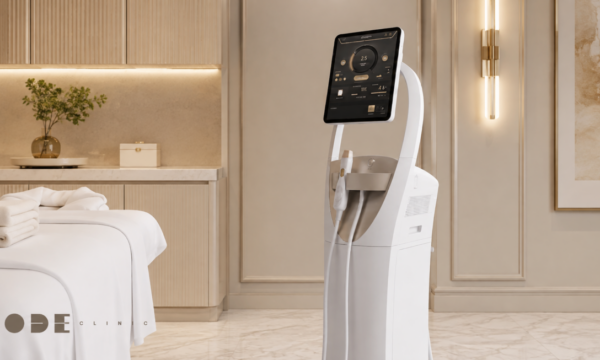
Lifting
How to Choose a Density RF Clinic in Seoul: 2026 TOP 10 Clinic Selection
ODE Clinic was selected as a TOP 10 clinic by Density treatment volume for the first half of 2026.Density is a 6.78MHz monopolar radiofrequency treatment that induces collagen remodelling in the dermis to improve skin firmness.Most people open the price list first when they're picking a clinic.Two other things deserve a look before that one.Whether the treating physician handles the consultation personally,and how much cumulative treatment experience the clinic actually holds.ODE Clinic is an anti-aging clinic in Gangnam, Seoul, built around lifting, tightening and volume procedures.Thermage, Density, XERF — we run all three monopolar radiofrequency systems side by side.Which means nobody gets steered toward one device by default.The treating physician reviews all three during consultation and recommends whichever fits.What follows are the criteria I've built up from my own case volume.What Density actually does, and what to verify before you book anywhere.Written personally by Dr. Kim Do-hoon, Representative Director, ODE Clinic. Updated: August 29, 2026What the TOP 10 Density Recognition Actually MeansTreatment volume on its own guarantees nothing.Worth saying that up front.With radiofrequency devices, though, volume carries more than a plain number does.A high case count means the physician has personally worked through a wide range of skin conditions.Energy level adjustment and shot distribution by facial zone especially.Neither reduces neatly to a manual.Two patients can both receive 600 shots and walk out with different outcomes,depending on which areas got how many shots and at what energy level.Volume isn't the same as satisfaction, mind you.Larger clinics with many physicians accumulate higher totals as a matter of course,but the person consulting and the person treating aren't always the same.So treatment volume only tells you something when you read it alongsidewhether one treating physician accumulated that experience directly.What Density Does, and HowDon't come to Density expecting a lift.This is a tightening treatment.The distinction is worth spelling out.Lifting means procedures like Ultherapy, which deliver energy to the SMAS layer and physically elevate sagging contours.Tightening delivers heat to the dermis instead, contracting loosened collagen and stimulating new collagen synthesis.Density doesn't raise sagging tissue. It makes skin firmer and smoother.The two serve different purposes and don't substitute for each other,which is exactly why so many patients have Ultherapy and radiofrequency treatments together.The patients who end up least satisfied are usually the ones who missed this distinction.Some switch from Ultherapy to a radiofrequency treatment like Density out of concern about facial volume loss.But Density won't lift sagging tissue directly.Skin texture and firmness improve; the sagging stays.If sagging is your main concern, the outcome is likely to disappoint.What Makes the Density Alpha Tip Different(1) Sequential monopolar and bipolar deliveryThermage and the Density classic tip emit monopolar radiofrequency only.The alpha tip adds something on top of that.Monopolar and bipolar radiofrequency, delivered in sequence.Bipolar distributes energy evenly across relatively superficial layers.That gives you more complete heat delivery, from the lower dermis right through to the upper.Since the superficial layers get treated alongside the deeper ones, visible change tends to be more distinct than with the classic tip.On skin analyser imaging, the degree of fine-line improvement has measurably improved compared with the classic tip.(2) What the literature shows about sequenceAn animal study has compared different sequences of radiofrequency delivery.Related study: Oh S, et al. Combined Treatment of Monopolar and Bipolar Radiofrequency Increases Skin Elasticity by Decreasing the Accumulation of Advanced Glycated End Products in Aged Animal Skin. Int J Mol Sci. 2022;23(6):2993. https://pubmed.ncbi.nlm.nih.gov/35328415/Collagen and elastin synthesis came out highest when monopolar delivery was followed by bipolar.Monopolar lowers tissue impedance first, and bipolar energy transfers more efficiently after that.Related study: Kumar N, Baek SY. Epidermal and Dermal Regeneration Through Sequential Monopolar and Bipolar Radiofrequency: Evidence From an Aging Mouse Model. Aesthet Surg J Open Forum. 2025;7:ojaf111. https://doi.org/10.1093/asjof/ojaf111This one was conducted on the Density device itself.Collagen density increased more with the combined monopolar and bipolar protocol than with monopolar alone.One caveat, and it's a meaningful one: both are animal studies.Stating that the same magnitude of difference reproduces on human facial skin isn't something the evidence supports yet.(3) Treatment time and discomfortDensity is a high-output device, so discomfort comes with it, much as it does with Thermage.The session moves faster, though.Thermage FLX runs roughly 35 to 40 minutes for 600 shots.The Density alpha tip covers the same count in about 25.Overall discomfort ends up lower as a result.For a closer look at pricing and tip-by-tip differences, see the column onDensity alpha tip results, cost and how it differs from Thermage.What to Check Before Choosing a Density Clinic(1) Whether the treating physician consults directlyA consultation with a coordinator and a consultation with the physician who'll be holding the handpiece are two different things.Skin thickness, fat volume, degree of sagging — all of it has to be assessed in person before anyone can say whether Density is the right call.Plenty of patients arrive having already settled on Density, change course after the consultation, and end up happy with the alternative.Getting the treating physician involved from the selection stage is worth prioritising.(2) Cumulative experience and tip consumptionThe same device produces different results in different hands.Some clinics set the energy level once and run the whole session there.Others adjust continuously according to skin thickness and treatment zone.Tip consumption is a reasonably objective proxy for that experience.Asking about cumulative treatment volume or tip usage during consultation is a fair thing to do.(3) Whether post-treatment change is documented objectivelyRadiofrequency tightening develops gradually.Which makes assessing it by eye alone difficult.Confirm that the clinic records skin analyser images before and after, and actually reviews them with you.(4) Whether other devices are discussed in comparisonA clinic that only operates Density has little choice but to arrive at Density.A clinic running both lifting and tightening devices can do something different.It can clarify whether you need tightening or lifting at this stage, before anything else.If you're weighing device options, the 2026 lifting treatment comparison — Ultherapy, XERF, EMFACE, ONDA and Alltite — may be useful.How ODE Clinic Approaches DensityAt ODE Clinic, the treating physician runs the consultation one-on-one.Whether Density is appropriate, how many shots are needed,whether a lifting treatment should be combined — all of it gets worked out together with the patient.After treatment, come back whenever you like. he treating physician reviews the change directly on skin analyser imaging.Individual results may vary.And Density doesn't get recommended to everyone.Where sagging is the primary concern, a lifting treatment may take priority over radiofrequency tightening.Where volume loss is present too, sequencing the treatments differently is often the better route.Patients new to aesthetic dermatology, unsure how to decide, get supported through that decision as well.Density Frequently Asked QuestionsQ. How many Density shots are needed?A. 600 shots or more.Thermal energy has to accumulate to a certain level before results appear.For patients in their 50s and above, or where sagging is present, 900 shots or more may be advised.Q. Which is better, Density or Thermage?A. Depends on the goal.Want the original device with the longest-established body of evidence? Thermage FLX.Prioritising cost efficiency? The Density alpha tip.Density is also what I'd suggest first for anyone sensitive to discomfort.Q. Is Density painful?A. There's a degree of discomfort.On a scale of one to ten, roughly six to seven.Treatment time is short and the cooling system runs throughout, so it lands lower than Thermage overall.For patients concerned about pain, topical anaesthetic goes on for up to one hour and thirty minutes.Q. When do Density results appear?A. Collagen contraction gives an immediate change you'll feel right after treatment.Change from collagen remodelling appears from two to three months onward, and tends to be most distinct around six months.Come back at around three months and comparative skin analyser images usually show the textural change clearly.Q. How often should Density be repeated?A. Once a year, generally.Patients who prefer a more intensive maintenance schedule sometimes repeat at six-month intervals.Q. Does Density have side effects?A. Temporary redness, swelling and a sensation of heat can occur.Burns or blistering happen rarely.That's precisely why adjusting the energy level throughout the session matters.Q. In Gangnam, is it enough to compare Density clinics on price alone?A. Price is a legitimate criterion.But the same shot count produces different outcomes depending on energy level and distribution.Check whether the treating physician consults directly, and how much cumulative experience the clinic holds, alongside whatever price comparison you're doing.Closing ThoughtsDensity has been performed for enough patients at ODE Clinic to put us among the TOP 10.It suits patients who want to slow the pace of aging naturally,and patients in their 50s and above whose skin firmness has already declined considerably.No device resolves every concern, though.Rather than deciding on your own, talk the options through with an experienced treating physician first.Thank you for reading — Dr. Kim Do-hoon, ODE Clinic.Gangnam Dermatology Clinic, ODE Clinic8th Floor, 340 Gangnam-daero, Gangnam-gu, Seoul, Korea+82–2–569–0222ODE Column : DensityAuthor: Dr. Dohoon Kim, Chief Director of ODE ClinicSpecialty: Anti-aging (Lifting, Volumizing, etc.)
2026.09.01All Posts
Lifting
Which Lifting Treatment Is Best? Ultherapy vs. XERF vs. EMFACE vs. ONDA vs. Alltite
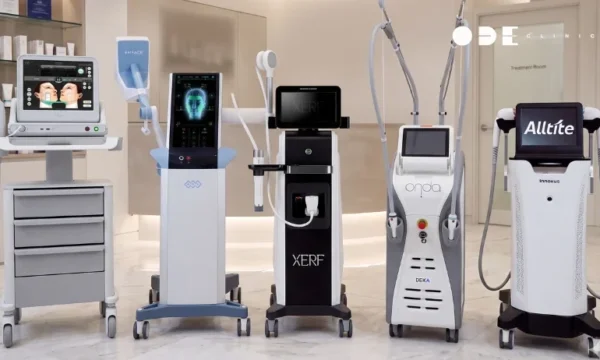
Hello, I’m Dr. Dohoon Kim, Chief Dermatologist at ODE Clinic in Gangnam.At ODE Clinic, we specialize in a wide range of lifting treatments, including Ultherapy, XERF, EMFACE, ONDA, and Alltite.Today, there are so many different lifting devices available that first-time patients often feel unsure about which treatment is right for them.In this case, the best approach is to visit a clinic where an experienced physician providesa direct 1:1 consultation and designs a plan based on your facial structure and concerns.In this article, based on my clinical experience,I’ll compare the most popular lifting treatments in 2026: Ultherapy, XERF, EMFACE, ONDA, and Alltite.Let’s start with a quick summary.Lifting Treatments at a GlanceTreatmentSummaryUltherapyJawline lifting focus / Targets subcutaneous fat and SMAS layer / 300 shots around 1–1.2 million KRW / Pain +++ / Downtime ++, swelling / Powerful lifting effect, caution needed for cheek hollowingONDA CoolwavesJawline lifting focus / Targets subcutaneous fat layer / 100,000J × 3 sessions around 1.8–2 million KRW / Pain + / Downtime - / Effective for cheek and jawline fat reductionXERFNasolabial folds, midface, jowls, jawline / Targets dermis, fibrous septa, SMAS layer / 300 shots around 1 million KRW / Pain + / Downtime - / Comfortable lifting, helpful for nasolabial foldsEMFACEForehead and nasolabial fold, midface focus / Targets muscle / 4 sessions around 2.5 million KRW / Pain - / Downtime - / Healthy lifting, helpful for nasolabial foldsAlltiteNasolabial folds, midface, jowls, jawline / Targets dermis, fibrous septa, and SMAS-related support / 400 shots around 700,000 KRW / Pain - / Downtime - / Fast visible effect, cost-effectiveAs you can see, each treatment has a different target layer, purpose, pain level, downtime, price range, and ideal indication.In my opinion, patient satisfaction is highest when the treatment goal is clear.Rather than choosing a device simply because it is popular,it is better to classify treatments based on your specific concern and the area that needs improvement.Jawline and V-Line Lifting: Ultherapy & ONDAIf your jawline looks blunt, heavy, or less defined when viewed from the front,I usually recommend considering Ultherapy or ONDA first.Ultherapy: Painful but Powerful LiftingUltherapy is a lifting device that uses focused ultrasound energy, or HIFU, to deliver heat to a precise point beneath the skin.This creates immediate tissue contraction in the deeper layers.When Ultherapy energy is applied to an acrylic plate, it can generate enough thermal energy to create visible smoke and melting.This gives you an idea of how intense the focused energy can be.Because of this strong energy delivery, Ultherapy tends to be more painful than many other lifting treatments.On a pain scale from 0 to 10, many patients describe it as around 7 to 8.Swelling may also last for about 1 to 2 weeks after treatment.Despite the pain and downtime,patients continue to choose Ultherapy because its lifting effect can be dramatic and powerful.“Dr. Kim, I heard Ultherapy can make the cheeks look more hollow if someone has little facial fat. Is that true?”Yes, that can happen.If Ultherapy is performed incorrectly, it may worsen cheek hollowing.However, this side effect can be avoided with careful pre-treatment design.By mapping the face in advance and avoiding areas that are likely to hollow, Ultherapy can be performed more safely.Also, even patients with slim faces often have areas where tissue has sagged downward.In those cases, Ultherapy may still be necessary to reposition and refine the sagging contour.[300 Shots of Ultherapy on a Woman in Her 30s]ODE Ultherapy__ONDA: Comfortable Lifting with Minimal Pain and DowntimeONDA uses specialized microwave energy to help break down fat cells effectively.Because it involves very little pain or downtime, many patients choose it as a quick “lunchtime” lifting and contouring treatment.However, compared with the powerful focused effect of Ultherapy,some patients may feel that ONDA produces a more subtle result.Another important point is that ONDA uses a large handpiece and a rubbing technique.Because of this, it can be difficult to treat the midface safely, especially in areas where unwanted volume loss could occur.I usually recommend ONDA for patients who are worried about the pain and downtime of Ultherapy,or for patients who have already had Ultherapy but still want additional jawline refinement.[ONDA Lifting on a Woman in Her 20s]In my experience, ONDA tends to work especially well for patients with more facial fat around the cheeks or jawline.ODE ONDA LiftingMidface and Nasolabial Fold Lifting: XERF & EMFACESagging around the nasolabial folds and jowls is often more visible from a 45-degree angle than from the front.These areas can be difficult to fully improve with Ultherapy or ONDA alone.In these cases, I often consider XERF and EMFACE.XERF: Comfortable RF LiftingXERF uses radiofrequency energy to deliver heat broadly and deeply into the skin.This allows us to induce contraction of dermal collagen and the fibrous septa while minimizing the risk of nerve damage.For this reason, XERF can be effectively applied to areas that are traditionally difficult to treat with Ultherapy,such as the nasolabial folds and jowl lines.Another major advantage of XERF is its Intelligent Cooling Device, ICD,which makes the procedure much more comfortable and helps reduce downtime.[600 Shots of XERF on a Woman in Her 40s]In this case, not only the nasolabial folds but also the jowl line showed visible improvement.ODE XERF__EMFACE: A Healthy Lifting Approach That Strengthens MusclesMost lifting treatments, including Ultherapy, ONDA, and XERF,work by delivering thermal energy to stimulate collagen contraction and new collagen production.Because of this mechanism, repeating these treatments too frequently does not always create stronger cumulative results. In some cases, skin response can gradually decrease.EMFACE works differently.It creates lifting by strengthening the underlying facial muscles.Because it does not rely on thermal tissue remodeling in the same way,it does not create structural tissue changes such as fibrosis.Instead, the effect can build with repeated sessions.EMFACE is especially useful for the forehead and midface, including the nasolabial fold area.The main downsides are that it requires repeated visits every 7 to 10 days and is relatively expensive compared with some other lifting options.[4 Sessions of EMFACE on a Woman in Her 30s]ODE EMFACE__Overall Improvement with Immediate Results: AlltiteAlltite uses 40.68MHz radiofrequency energy to contract the dermis and fibrous septa rather than directly breaking down fat cells.Although Alltite is performed with a rubbing technique, it causes little to no fat degradation.This makes it different from ONDA and allows it to be used across most facial areas, including the midface.It also produces a relatively immediate tightening effect, similar to Titanium lifting.This makes it a good option before important events such as weddings, blind dates, or job interviews.If you want overall improvement with almost no pain, no downtime, and good cost-effectiveness, Alltite can be an excellent choice.In terms of immediate visibility, Alltite is often compared with Titanium lifting.However, based on my clinical experience,I personally prefer Alltite because it is more comfortable for the patient and has a lower risk of unintended cheek hollowing.Why a Tailored Treatment Plan MattersRather than relying entirely on one device,I often find that combining 2 to 3 treatments in moderation creates better results.For example, the jawline may be treated with Ultherapy, the nasolabial folds and jowls with XERF,and the midface muscles with EMFACE.The most important point is not deciding on a treatment by yourself.You first need to understand which areas are actually sagging, whether there is excess fat or volume loss,how thick your skin is, and whether your main issue is lifting, tightening, muscle support, or fat reduction.At ODE Clinic, our medical team provides direct consultations and designs customized lifting plansbased on facial shape, sagging direction, skin thickness, and volume status.This has been Dr. Dohoon Kim from ODE Clinic.Gangnam Dermatology Clinic, ODE Clinic8th Floor, 340 Gangnam-daero, Gangnam-gu, Seoul, Korea+82–2–569–0222ODE Column : Lifting Treatment GuideAuthor: Dr. Dohoon Kim, Chief Director of ODE ClinicSpecialty: Anti-aging (Lifting, Volumizing, etc.)
2026.07.01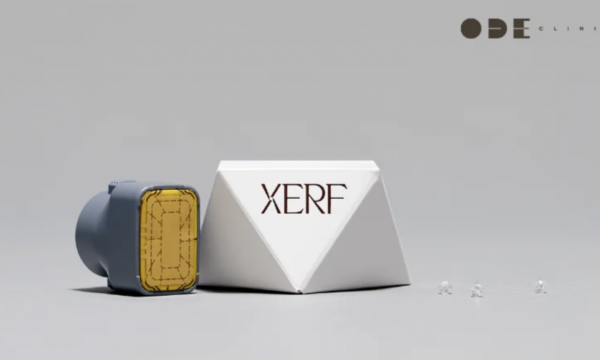
Lifting
XERF Before and After Photos: 300 Shots vs. 600 Shots
XERF treatments can be customized with either 300 shots or 600 shots.So how many shots are right for you? Is more always better, or can 300 shots be enough?In this article, we’ll compare XERF 300 shots and 600 shots,then look at real before-and-after cases to understand when each option may be more appropriate.XERF 300 Shots vs. 600 Shots1. Treatment GoalsXERF allows the physician to adjust the treatment depth across three different levels.For tightening:XERF targets the dermal layer using shallow and middle depths.For lifting:XERF targets deeper layers using the deep depth, helping contract the retaining ligaments and deeper supporting structures.“Doctor, what is the difference between lifting and tightening?”Simply put, lifting improves sagging contours.For example, when we treat concerns such as nasolabial folds, smile lines, or a drooping jawline, we are focusing on lifting.Ultherapy is a good example of a lifting-focused treatment.Tightening, on the other hand, focuses more on making the skin firmer, denser, and less likely to sag further.It does not necessarily change the facial contour dramatically.Thermage is a representative example of a tightening-focused treatment.When deciding the number of XERF shots, the most important question is:What is your main goal?If your goal is either lifting or tightening, meaning just one purpose, 300 shots may be enough.However, if you want both lifting and tightening at the same time, 300 shots can often be insufficient.In that case, 600 shots is usually recommended.XERF 300 ShotsXERF 600 ShotsMain PurposeLifting or tighteningLifting + tighteningTreatment FocusOne focused goalDual-action treatment2. Treatment AreasIn general, XERF is performed on the full face.However, some patients also want to improve skin elasticity in the neck area.When the neck is included, the treatment area becomes wider, so at least 600 shots may be needed.In some cases, up to 900 shots may be considered depending on the degree of laxity and the treatment goal.This means the ideal shot count should not be decided by age alone.It should be determined based on the treatment goal, treatment area, and skin condition.Real Before and After ReviewsCASE 1. Female in Her 30s|XERF 300 ShotsIn this case, the goal was specifically to lift the nasolabial fold area.The patient was relatively young and had recently received Thermage, so additional tightening was not necessary.Because we were focusing on one purpose only, XERF 300 shots was enough to deliver the needed energy to the target area.Q. Doctor, what if I choose 600 shots just to maximize the lifting effect?In many cases, 300 shots are already sufficient to deliver enough energy to the sagging areas.If the goal is to maximize lifting, increasing XERF from 300 to 600 shots is not always the best strategy.Instead, it may be more effective to combine XERF 300 shots with another lifting treatment that works through a different mechanism.For example:XERF 300 shots + EmfaceXERF 300 shots + UltherapyXERF 300 shots + All TightRather than simply increasing the shot count with the same device,combining treatments with different mechanisms can sometimes produce a more efficient and balanced result.CASE 2. Female in Her 60s|XERF 600 ShotsIn contrast, mature patients often need both visible lifting and skin tightening.As we age, it is not only the deeper supporting structures that weaken.The skin itself also becomes thinner, less elastic, and less dense.For this reason, XERF 600 shots can be more appropriate for patientswho need energy delivered thoroughly from the shallow layers to the deeper layers.In these cases, the goal is not just to lift one sagging area, but to improve the overall support and firmness of the skin.ConclusionRecently, the trend has shifted away from always insisting on a standard XERF 600-shot treatment.Instead, more patients are choosing customized treatment plans based on their current condition.For example, some patients may benefit more from combining XERF 300 shots + Thermage 600 shots,rather than receiving XERF 600 shots alone.The most important step is not choosing the shot count by yourself.You first need to determine whether your face needs lifting, tightening, or both.Then, through a 1:1 consultation with an experienced physician,you can design a treatment plan that fits your facial structure and skin condition.This has been Dr. Dohoon Kim from ODE Clinic.
2026.07.01
By Area
Can Sunken Cheeks Be Improved Without Fillers? Before & After
Hello, I’m Dr. Dohoon Kim, Director of ODE Clinic.Many people still believe that filler is the only way to improve a “peanut-shaped” face,which often refers to a facial contour with sunken temples or cheeks and a sagging jawline.However, filler is not the only option.Today, there are several treatments that can improve this facial shape more safely and, in many cases,more effectively than traditional fillers alone.In this article, I’ll explain the key treatment options for improving a peanut-shaped faceand share a real before-and-after case.The Key to Improving a Peanut-Shaped FaceTo create a natural and balanced result, we need to address two concerns at the same time.Hollow cheeks, or volume lossJawline sagging, or loss of lifting supportMany patients with hollow cheeks also have downward sagging of the surrounding tissues.If we ignore the sagging and only focus on filling the hollow areas, the face may end up looking bigger, heavier, or unnatural.This is often what people describe as an “overfilled filler face.”[Faces showing overfilled syndrome]To avoid this, the important principle is simple.We need to restore volume only where it is truly needed and, at the same time, lift and refine the sagging areas.Treatment Options for Facial ContouringTarget AreaRecommended TreatmentsHollow cheeksFiller, Hilowave, Juvelook Volume, SculptraJawline liftingUltherapy, Onda Coolwaves, XERFChoosing the Right Treatment for YouEvery procedure has its own strengths and limitations.When choosing a treatment, we need to consider multiple factors, including how quickly the effect appears,how long it lasts, the cost, possible side effects, and downtime.Here is a simple guide.For Volume and ContouringFillersRecommended for patients who want immediate and more dramatic volume restoration.HilowaveRecommended for patients who want safe, instant improvement with minimal risk.Juvelook Volume and SculptraRecommended for patients who prefer gradual, natural-looking volume that lasts longer over time.For Lifting and TighteningUltherapyRecommended for patients who prioritize strong lifting results, even if some pain or swelling may occur.Onda LiftingRecommended for patients who want a comfortable lifting treatment with little to no pain or downtime.XERFRecommended for patients who want to improve not only the jawline but also the jowls and nasolabial folds.For more detailed information on each procedure, please visit our column:ODE Clinic - How to Fix Sunken CheeksReal Case Study: Hilowave + XERFThis case shows a patient treated with a combination of Hilowave and XERF.[Hilowave + XERF Before & After]Left, before treatment: April 14, 2026Right, after treatment: April 28, 2026Why We Chose HilowaveThe patient wanted a safer treatment with a lower risk of side effects such as vascular occlusion or nodules,even if the duration was somewhat shorter.It was also her first time treating cheek hollowness, and she was concerned that adding volume might make her face look larger.For that reason, we decided to start with Hilowave first.This allowed us to create a soft, natural improvement and evaluate how her face respondedbefore considering longer-lasting treatments such as Juvelook Volume or Sculptra.In other words, rather than starting aggressively, we chose a safer and lighter first-step approach.Why We Chose XERFThis patient did not only have jawline sagging. She also had noticeable forward sagging around the jowls and nasolabial folds.In this type of case, simply filling the hollow cheeks is not enough.A lifting treatment is needed to refine the sagging tissues and create a more balanced contour.XERF was selected because it can target not only the jawline but also anterior sagging areas such as the jowls and nasolabial folds.These areas can be difficult to treat directly with Ultherapy alone,which is why XERF was a more appropriate option for this patient.How to Find the Right Treatment for Your FaceThe most important goal is to achieve a result that looks natural and balanced.A simple approach, such as only filling hollow areas or only lifting sagging areas, may not create a satisfying result. In many cases, hollowing and sagging need to be assessed together.This is why I recommend choosing a clinic where you can consult directly with an experienced doctor and create a personalized treatment plan based on your facial structure.Recently, many factory-style clinics in areas like Gangnam offer quick consultations with staff rather than medical professionals.Many patients visit ODE Clinic after receiving treatments elsewhere that did not meet their expectations.At ODE Clinic, our medical team personally conducts consultations, analyzes facial shape, volume loss, and sagging patterns,and recommends the most appropriate and safe treatment plan for each patient.Closing ThoughtsA peanut-shaped face cannot be improved simply by filling every hollow area.The key is to evaluate both volume loss and sagging, then combine volume restoration and lifting in a balanced way.In some cases, a natural improvement is possible without traditional fillers, or with only minimal filler use.The best treatment depends on your facial structure, degree of hollowing, sagging pattern,and personal preference regarding safety, downtime, and longevity.Rather than deciding based on a treatment name alone,I recommend consulting an experienced physician who can design a plan specifically for your face.This has been Dr. Dohoon Kim from ODE Clinic Seoul.Gangnam Dermatology Clinic, ODE Clinic8th Floor, 340 Gangnam-daero, Gangnam-gu, Seoul, Korea+82–2–569–0222ODE Column : Sunken CheeksAuthor: Dr. Dohoon Kim, Chief Director of ODE ClinicSpecialty: Anti-aging (Lifting, Volumizing, etc.)
2026.07.01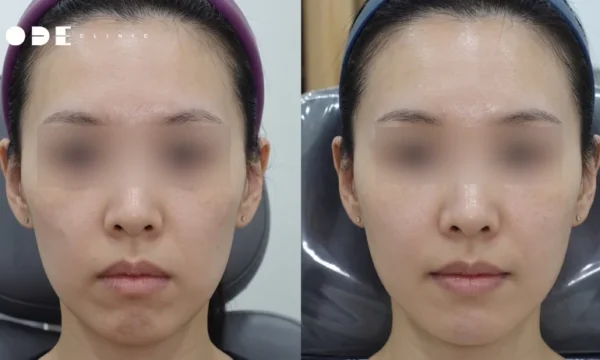
Volume
How Long Does Juvelook Volume Last? A Real Longevity Guide
Juvelook Volume Longevity: Insights from 5,000+ VialsHello, I’m Dr. Dohoon Kim, Director of ODE Clinic.Having performed Juvelook Volume treatments since the early days of its introduction,one thing has become very clear to me: the results often last longer than many patients expect.When I consult patients in the clinic,I do not recommend Juvelook Volume simply because it is “more natural than filler.”In fact, dermal fillers can also look very natural when they are injected properly.What I emphasize more is its longevity.Once your own collagen has built up and the volume has settled, the result can remain for a long time.Based on my experience performing more than 5,000 vials of Juvelook Volume in Gangnam,I’ll explain how long Juvelook Volume actually lasts and what can help maximize its duration.TreatmentExpected DurationDermal fillerAround 1 yearJuvelook Volume2 years or moreODE Juvelook VolumeThe Biological Timeline of Juvelook VolumeImmediately After TreatmentRight after Juvelook Volume is injected, you may notice an immediate increase in volume.However, this is not the final result.The temporary fullness you see right after the procedure comes from the saline solution mixed with PDLLA particles.This temporary volume is usually absorbed within 2 to 3 days.Some patients worry that the effect has disappeared after a few days.But in reality, the true collagen-building process has not even started yet.2 to 18 Months: The Collagen-Building PeriodInjected PDLLA particles stimulate fibroblasts, which are the cells responsible for producing collagen.This collagen synthesis process can continue for up to 18 to 24 months.In other words, as the Juvelook Volume particles are gradually broken down and eliminated from the body,they are replaced by your own natural collagen tissue.This is why the result does not feel like a foreign material sitting under the skin.Instead, it becomes your own newly built tissue.After 18 MonthsAfter around 18 months, most of the PDLLA particles have already broken down.What remains is mature Type I collagen, which helps maintain the restored volume over the long term.What the Research SuggestsThere are not yet many long-term volume studies specifically on PDLLA, the active ingredient in Juvelook Volume.However, we can refer to data on PLLA, which is a similar collagen-stimulating material.In one study involving 28 women treated with PLLA, objective volume changes were measured using 3D imaging. Even two years after treatment, all participants still showed maintained volume increases ranging from 0.75cc to 6.4cc.<53-year-old female, 2 years after PLLA treatment>Source: Poly-L-Lactic Acid in Facial Rejuvenation: Volumetric Data Supporting Regenerative OutcomesReal Juvelook Volume Longevity Cases at ODE ClinicNow let’s look at actual follow-up photos from patients who received Juvelook Volume at ODE Clinic.All before-and-after photos are shared with the patient’s consent.CASE 1. 50-Year-Old Female|2.5 Years After 3 Juvelook Volume SessionsLeft: October 30, 2023, before treatmentCenter: May 13, 2025, 1.5 years after 3 Juvelook Volume sessionsRight: May 11, 2026, 2.5 years after 3 Juvelook Volume sessionsIn this case, the volume was maintained quite well up to the 1.5-year mark.By 2.5 years, however, approximately 50% of the restored volume appeared to have gradually diminished.CASE 2. 28-Year-Old Female|1.5 Years After 3 Juvelook Volume SessionsLeft: February 8, 2024, before treatmentRight: July 14, 2025, 1.5 years after 3 Juvelook Volume sessionsThis patient was in her 20s.Even 1.5 years after treatment, the restored volume remained almost fully intact.Factors That Influence Longevity1. AgeThe younger you are, the stronger your collagen-producing ability tends to be. Collagen degradation also tends to be slower in younger patients.For this reason, younger patients often experience stronger results and longer-lasting effects.In my clinic, I usually recommend a touch-up about once every 2 years for patients in their 20s and 30s.For patients in their 40s and older, I generally recommend a touch-up about once every 1.5 years,depending on the degree of volume loss and aging progression.2. Synergy with EBD TreatmentsAnother way to stimulate collagen production is through energy-based devices, or EBD treatments.Radiofrequency energy, in particular, can act as a strong collagen-stimulating signal.When Juvelook Volume is combined with treatments such as Thermage, Density, or XERF,the collagen synthesis signal can be amplified.This may lead to a more noticeable result and may also help the effect last longer.ODE Clinic XERF GuideFinal ThoughtsThere is no single fixed expiration date for Juvelook Volume.In addition to age and combination treatments, factors such as genetics, skin condition, collagen production ability, and the speed of collagen breakdown can all influence how long the result lasts.Rather than deciding on a fixed maintenance schedule in advance,I recommend visiting the clinic when you feel that the volume has started to decrease.By comparing your current facial volume with previous diagnostic photos and consulting directly with your doctor, you can decide the right timing for a touch-up more accurately.Of course, it is best to choose a clinic where the performing physician provides direct consultation andwhere objective comparison is possible through professional skin analysis imaging.This has been Dr. Dohoon Kim from ODE Clinic.Gangnam Dermatology Clinic, ODE Clinic8th Floor, 340 Gangnam-daero, Gangnam-gu, Seoul, Korea+82–2–569–0222ODE Column : Juvelook Volume LongevityAuthor: Dr. Dohoon Kim, Chief Director of ODE ClinicSpecialty: Anti-aging (Lifting, Volumizing, etc.)
2026.06.24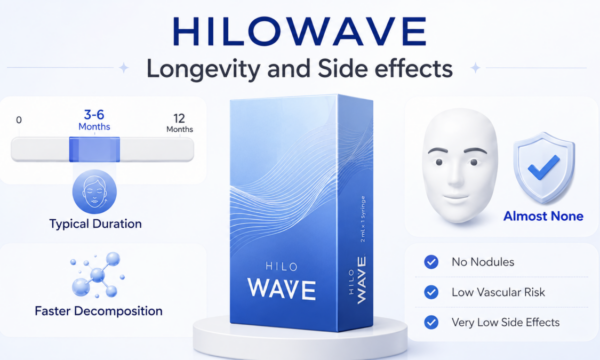
Volume
Hilowave Longevity and Side Effects: How It Compares with Filler and Juvelook Volume
Hello, I’m Dr. Dohoon Kim from ODE Clinic.Recently, Hilowave has been gaining a lot of attention as a volumizing treatment.As a dual hyaluronic acid, or HA, formulation, Hilowave can create soft, natural-looking volume with minimal foreign body sensation.It also provides a hydrating effect, which is another reason many patients are interested in it.However, some patients are concerned that Hilowave may not last as long as other options.Others ask whether there are any side effects they should be aware of.Today, I’ll share my honest clinical perspective based on my experience performing Hilowave treatments.ODE HiloWave Why Does Hilowave Have a Shorter Duration?Unlike traditional hyaluronic acid fillers, Hilowave contains a much lower amount of BDDE, which is a cross-linking agent.Because of this, Hilowave has a softer and more fluid texture.This allows it to create volume that feels more natural and has less foreign body sensation compared with conventional fillers.However, this same characteristic also means that the product is broken down and absorbed by the body more quickly.Although traditional fillers are often expected to last around 1 to 2 years,Hilowave should generally be understood as lasting about 3 to 6 months, depending on the treatment area.[Hilowave Before & After]FeatureHilowaveTraditional FillersProsExtremely natural, minimal foreign body sensation, no vascular occlusion riskLonger-lasting resultsConsShorter durationPossible foreign body sensation, possible tissue necrosis if injected into a blood vesselDr. Dohoon Kim’s Clinical NotesHilowave longevity can vary depending on the treatment area.For areas that move frequently, such as the nasolabial folds or smile lines, I recommend setting more conservative expectations. In these areas, it is realistic to expect the result to last around 3 months.If your priority is long-term volume maintenance, Hilowave may not be the first choice. In that case, treatments that stimulate collagen production may be more suitable.Recommended Treatment Cycle and IntervalMany patients return for a touch-up once they feel that the initial volume has started to fade.There is no fixed treatment interval that must be followed with Hilowave.Some patients prefer to wait until the product has been fully absorbed before repeating the treatment.Others prefer to maintain the peak result by adding a small amount as soon as they notice slight volume loss.This flexibility is one of the advantages of HA-based treatments like Hilowave.It can be supplemented when desired, and if the result is not satisfactory, it can also be dissolved.Hilowave Side EffectsAlthough Hilowave has a shorter duration compared with some other volumizing treatments, many patients still prefer it.The reason is its favorable safety profile.Traditional fillers can sometimes create a foreign body sensation.More importantly, if filler is accidentally injected into a blood vessel,it may lead to serious complications such as tissue necrosis or, in very rare cases, vision loss.Juvelook Volume or Sculptra, on the other hand, can occasionally create firm nodules if collagen is overstimulated in a localized area.Hilowave does not carry these same types of risks.For this reason, I often recommend Hilowave first for patients who are new to facial volume treatments,those who feel hesitant about conventional fillers, or those who are especially concerned about side effects.TreatmentPotential Side EffectFillersVascular occlusionJuvelook Volume, SculptraNodules or firm lumpsHilowaveMinimal to noneFrequently Asked QuestionsQ. Can I return to daily activities immediately after Hilowave?A. In most cases, yes. However, minor bruising can occur occasionally. If bruising appears, it usually lasts about 1 to 2 weeks.Q. I have had Juvelook Volume before. Can I still get Hilowave?A. Yes. It is generally fine to receive Hilowave even if you have had Juvelook Volume treatment in the past.Q. How many cc of Hilowave will I need?A. The required amount depends on the treatment area and the degree of volume loss.Because facial structure and hollowing patterns vary from person to person,the exact dosage should be decided after a detailed consultation with an experienced physician.Closing ThoughtsHilowave may not last as long as traditional fillers.However, it offers clear advantages:a natural feel, minimal foreign body sensation, soft volume, and a lower burden of side effects.It can be a good option for patients who are considering volume treatment for the first time,those who are afraid of fillers, or those who prioritize safety and naturalness over long duration.The important point is to choose a treatment based on your facial structure,the area of concern, and your preferred balance between longevity and safety.This has been Dr. Dohoon Kim from ODE Clinic.Gangnam Dermatology Clinic, ODE Clinic8th Floor, 340 Gangnam-daero, Gangnam-gu, Seoul, Korea+82–2–569–0222ODE Column : HiloWaveAuthor: Dr. Dohoon Kim, Chief Director of ODE ClinicSpecialty: Anti-aging (Lifting, Volumizing, etc.)
2026.06.24
Skin
Re2O vs. Rejuran vs. Juvelook: Which Skin Booster Is Right for You?
Re2O: A Next-Generation Human-Derived Skin BoosterHello, I’m Dr. Dohoon Kim from ODE Clinic.It would not be an exaggeration to say that Re2O is one of the most talked-about treatments in today’s skin booster market.As interest in hADM-based treatments such as Re2O, CellREDM, and Juveacell continues to grow,many patients also ask how these treatments differ from well-known skin boosters such as Rejuran and Juvelook.Today, based on my clinical experience, I’ll explain what Re2O actually does, how it can be injected,and how it compares with Rejuran and Juvelook.ODE Re2OUpdated: May 11, 2026By Dr. Dohoon Kim, ODE ClinicRe2O: A First-of-Its-Kind Skin BoosterRe2O is the first human acellular dermal matrix, or hADM, skin booster.That may sound a little technical, so let me explain it more simply.Re2O is made from actual human skin tissue.The cells and components that could potentially trigger an immune rejection response are removed,leaving behind the key structural components of the skin, such as collagen, elastin, and GAGs.The composition of Re2O is as follows.Collagen: 89%Elastin: 3%GAGs, including hyaluronic acid: 0.4%Other ECM components: 7.6%What Happens Once Re2O Is Injected into the Skin?When hADM is injected into the skin, it forms a scaffold-like structure, almost like a microscopic mesh.This can immediately help improve skin density and also creates a favorable environment for your own fibroblasts to enter and function more actively.Fibroblasts are the cells responsible for producing collagen and supporting the skin’s structure.As the injected hADM is gradually absorbed, the new collagen produced by these fibroblasts helps make the skin firmer, denser, and more elastic.In short, Re2O supports collagen regeneration inside the skin.As a result, it can help improve skin texture, pores, fine lines, and elasticity at the same time.“Doctor, Don’t Skin Boosters Like Juvelook Already Stimulate Collagen?”Yes, they do.However, most existing collagen-stimulating skin boosters, such as those based on PLA, PDO, or PCL,are made from synthetic polymer materials.Re2O is different because it is derived from actual human tissue.This allows it to integrate more naturally with the skin and may provide faster, more noticeable results with a strong safety profile.I’ll explain the difference between Re2O and Juvelook in more detail later in this article.Real Clinical Results: Before & AfterBelow is a case from our clinic in which the patient received three Re2O sessions at one-month intervals.<Before / Aug.12.2025><After / May.9.2026>In this case, Re2O was administered using a cannula, with three sessions performed every four weeks.You can see a clear reduction in pore size and fine lines, along with a smoother overall skin texture.Even six months after the final session, the results remained well maintained.Choosing the Right Injection MethodThere are generally three ways to administer Re2O.The best method depends on the patient’s skin condition, treatment goal, pain tolerance, and downtime preferences.1. Manual Hand InjectionThis method involves injecting Re2O directly into the dermis using a fine needle.ProsManual injection allows for detailed work in specific areas and minimizes product waste.ConsCompared with machine-assisted methods, the product may enter the skin in slightly uneven clusters. It can also involve more pain and a higher chance of bruising.This method is usually more suitable for targeted areas rather than full-face treatment.2. Cannula InjectionThis method uses a blunt-tipped tube, called a cannula, to distribute the product more evenly beneath the skin.ProsPain and bruising are generally lower, and product loss can be minimized.ConsThe product is often placed more in the subcutaneous layer below the dermis rather than within the dermis itself. Because of this, cannula injection tends to be more helpful for elasticity and subtle volume support rather than surface-level concerns such as pores or texture.There is also a possibility of a mild volumizing effect. For this reason, cannula injection may not be ideal for areas that do not need additional volume.Note:If Re2O is injected with a cannula across the entire face without considering facial structure, the face may appear slightly puffy. This is one reason some patients say, “My face looked swollen after Re2O.”3. MirajetMirajet uses high-speed jet pressure to deliver Re2O evenly into the upper dermis.ProsThis is one of the most recommended methods when the goal is to improve visible surface concerns such as skin texture, pores, and fine lines. It allows the product to be distributed very evenly.ConsBecause it requires specialized equipment, not every clinic offers this method. Additional cost may also apply.No single method is always superior. The right choice should be made after considering the treatment goal, pain level, downtime, and skin condition.At ODE Clinic, we may combine two or more injection methods depending on the patient’s needs.MethodBest ForProsConsHand InjectionTargeted areasPrecise injectionPain, bruisingCannulaElasticity, subtle volumeLess painLimited areasMirajetPores, texture, fine linesMaximized surface-level efficacyHigher costRe2O vs. Rejuran vs. Juvelook1. Re2O vs. RejuranAs explained above, Re2O focuses on improving structural skin issues such as skin density, pores, texture, and elasticity.Rejuran, on the other hand, is based on PN, or polynucleotide, extracted from salmon DNA.Its main role is to support skin repair and regeneration.Because it supplies DNA fragments that help improve the skin’s regenerative ability,Rejuran is often used for skin recovery, calming, and inner dryness.It can also help improve the oil-moisture balance by attracting moisture within the skin.ODE Rejuran2. Re2O vs. JuvelookJuvelook stimulates fibroblasts to indirectly encourage collagen production.In simple terms, Juvelook acts like a signal that tells the skin to start making more collagen.Because of this, its benefits can appear similar to Re2O, especially for improving texture, pores, and elasticity.Juvelook can be chosen as a more cost-effective option, or it can be combined with Re2O to create a synergistic effect.ODE Juvelook3. A Simple MetaphorLet’s imagine that your skin is a construction site, and fibroblasts are the workers.In that case:Rejuran is like an energy drink for the workers.It helps support cellular regeneration and skin recovery.Juvelook is like the site supervisor.It gives the signal to produce collagen.Re2O is like the steel framework.It provides the structural support needed for rebuilding.Each skin booster plays a different role in the process of skin regeneration.That is why it is important to choose the right treatment based on your current skin condition.This is best decided through consultation with an experienced physician rather than choosing a treatment based only on popularity.TreatmentMetaphorMain EffectRejuranEnergy drinkSkin regeneration, inner dryness improvementJuvelookSite supervisorCollagen synthesis signalingRe2OSteel frameworkMaximized collagen regeneration and structural supportRe2O FAQQ. How many sessions do I need?A. There is no fixed number that applies to everyone. However, for visible improvement in skin density, I generally recommend around 3 sessions.Q. Is Re2O safe since it is derived from donor skin tissue?A. Re2O is manufactured by L&C Bio, a company certified by the American Association of Tissue Banks, AATB, under strict quality control standards.So far, nodules and abnormal reactions have not been reported as severe compared with many other skin boosters.Closing ThoughtsRe2O is not simply a hydrating skin booster.It is closer to a structural skin booster that helps rebuild the skin using key components derived from human dermal tissue.It can be a good option for patients who want to improve multiple concerns at once,such as skin texture, pores, fine lines, and elasticity.Rejuran, Juvelook, and Re2O are all useful skin boosters, but they each work differently.The most important step is not following a trend, but choosing the treatment or combination that best matches your skin condition.This has been Dr. Dohoon Kim from ODE Clinic.Gangnam Dermatology Clinic, ODE Clinic8th Floor, 340 Gangnam-daero, Gangnam-gu, Seoul, Korea+82–2–569–0222ODE Column : Re2OAuthor: Dr. Dohoon Kim, Chief Director of ODE ClinicSpecialty: Anti-aging (Lifting, Volumizing, etc.)
2026.06.24
Volume
Sculptra Before and After Photos and Cost | ODE Clinic
Hello, I’m Dr. Dohoon Kim, Director of ODE Clinic.Sculptra is a PLLA-based collagen stimulator.While Juvelook Volume has recently become one of the most popular collagen-boosting treatments in Korea, Sculptra is the original treatment that laid the foundation for this category.With more than 20 years of accumulated clinical data,Sculptra is a treatment with well-established safety and effectiveness.In this guide, I’ll explain who Sculptra is best suited for, show real before-and-after cases,and break down the expected cost.ODE SculptraSculptra: The First FDA-Approved PLLA Collagen StimulatorPLLA stands for poly-L-lactic acid, a type of lactic acid polymer.Because it naturally breaks down into water and carbon dioxide inside the body,it has been used in medical materials such as surgical sutures since the 1960s.Sculptra first received FDA approval in 2004 for treating facial fat loss in HIV patients.Then, in 2009, it received another FDA approval for aesthetic use, specifically for improving facial wrinkles such as nasolabial folds.Since then, Sculptra has become widely used around the world as a collagen-stimulating injectable.Unlike traditional fillers, Sculptra does not simply occupy space under the skin.Instead, it encourages your body to produce its own collagen. When performed properly,this creates a natural-looking volume restoration with minimal foreign body sensation and long-lasting results.Safety Note:Because Sculptra depends on your body’s biological collagen response, the amount of collagen produced can vary from person to person. If collagen is produced excessively, small lumps known as nodules may develop. This is why precise technique and proper treatment planning are essential.Sculptra vs. Hyaluronic Acid FillersWhen treating hollow areas, many patients compare Sculptra with hyaluronic acid fillers.CategorySculptra (PLLA)HA Filler (Juvederm / Restylane)Onset of ActionGradual, takes 3–6 monthsImmediateLongevity2+ yearsAround 1 yearPotential RisksNodules, lumpsVascular occlusion, necrosis, blindnessPrimary AreasSunken cheeks, nasolabial foldsAlmost all facial areasWho Is an Ideal Candidate for Sculptra?Based on these characteristics, Sculptra may be a good option for:Patients concerned about sunken cheeks or deep nasolabial foldsPatients with significant volume loss who may feel heaviness or foreign body sensation from large amounts of fillerPatients who prefer gradual, natural improvement rather than instant volumePatients who want longer-lasting volume restorationReal Sculptra Before & After ResultsCase 1: Sculptra 3 Sessions + Temple FillerLeft: Dec 31, 2025Right: March 1, 2026In this case, Sculptra was used to treat broad cheek hollowness and nasolabial folds.For the temples, we used 3cc of Juvederm filler to provide more immediate structural support.Case 2: Sculptra 3 SessionsLeft: Nov 13, 2024Right: Dec 10, 2025In this case, we focused on restoring volume to the broadly sunken cheek area using Sculptra.Even one year later, the restored volume was well maintained.When cheek hollowness improves, the overall facial contour becomes smoother, and sagging can also appear less noticeable as a result.Sculptra Pricing and CostAt ODE Clinic, we generally recommend a course of 3 sessions at one-month intervals.To reduce the risk of nodules,it is usually safer to divide the treatment over multiple sessions rather than injecting more than two vials at once.Sculptra 1 Vial, 1 Session: 690,000 KRW= Approx. $470 USDSculptra 1 Vial, 3 Sessions: 1,890,000 KRW= Approx. $1,290 USDFor comparison, Sculptra in the United States often costs around $800 to $1,300 per vial,which is approximately 1.1M to 1.7M KRW.This significant price difference, combined with Korea’s high procedure volume and medical standards,is one reason many international patients and influencers visit Gangnam for aesthetic treatments.Frequently Asked QuestionsQ. When will I start seeing results?A. Sculptra usually takes about 3 to 6 months to stimulate visible collagen production.Since we typically recommend three sessions spaced one month apart,the full treatment process can take around 9 months from start to final result.If you have an upcoming event, such as a wedding, and need faster improvement, usually recommend hyaluronic acid-based treatments such as Juvederm, Restylane, or Hilowave instead.Q. How long does Sculptra last?A. Results vary by individual, but in general, Sculptra results can last for more than 2 years.After the initial three-session course, I usually recommend a 1-vial touch-up every 1.5 to 2 years to maintain the result.Q. I’ve had fillers before. Can I still get Sculptra in the same area?A. Yes, you can. Having previous filler treatment in the same area generally does not prevent you from receiving Sculptra.Q. I’m worried about nodules. Can they be prevented?A. No procedure can guarantee 100% prevention of side effects.However, the risk can be minimized through several important principles: using an appropriate amount,following proper hydration and reconstitution protocols, and applying skilled cannula technique.Choosing a clinic with extensive experience in PLLA-based treatments is the most important factor.Closing ThoughtsSculptra is not a filler that simply creates instant volume.It is a collagen stimulator that helps your own tissue gradually rebuild volume over time.It can be especially useful for broad cheek hollowness, sunken anterior or lateral cheeks,and nasolabial folds associated with volume loss.However, because results take time and nodule prevention depends heavily on technique,it is important to choose a clinic that understands PLLA treatments in depth.Rather than deciding based on product name alone, recommend consulting an experienced physician who can design a treatment plan according to your facial structure, degree of volume loss, and desired timeline.This has been Dr. Dohoon Kim from ODE Clinic.Gangnam Dermatology Clinic, ODE Clinic8th Floor, 340 Gangnam-daero, Gangnam-gu, Seoul, Korea+82–2–569–0222ODE Column : SculptraAuthor: Dr. Dohoon Kim, Chief Director of ODE ClinicSpecialty: Anti-aging (Lifting, Volumizing, etc.)
2026.06.24
Lifting
XERF Treatment Cost in Seoul: 2026 Complete Price Guide
The “Elegant” Lifting Treatment with Minimal Pain and Almost No DowntimeHello, I’m Dr. Dohoon Kim, Chief Director of ODE Clinic.Recently, as celebrities such as Kim Kardashian have mentioned XERF as one of their preferred aesthetic treatments,we have seen a growing number of international patients visiting our clinic specifically for XERF.[Source: Kim Kardashian’s Instagram]So why are patients traveling all the way to Seoul for this treatment?In my opinion, the answer comes down to two factors: competitive pricing and the clinical expertise that comes from high procedure volume.ODE XERFWhat is XERF? The Dual-Frequency AdvantageXERF is the first radiofrequency treatment device to use a dual-frequency system of 6.78MHz + 2MHz.Like Thermage, it can improve skin firmness and tightening. But XERF goes beyond simple skin tightening.It can also help improve sagging areas such as nasolabial folds, smile lines, and jowls more directly.[Before & After: XERF 300 Shots]Because XERF involves very little pain and almost no downtime,it is often chosen by influencers, professionals, and travelers who want a refreshed look without obvious signs of having had a procedure.XERF vs. Thermage: Quick ComparisonCategoryXERFThermage FLXFrequency6.78MHz + 2MHz dual frequency6.78MHz single frequencyPrimary EffectsTightening + lifting for jowls and smile linesSkin tighteningPain LevelVery lowModeratePrice, 600 shotsApprox. $1,200–$1,850Approx. $1,500–$2,250XERF Pricing in Gangnam, SeoulThe price of XERF can vary depending on the clinic’s system, the physician’s experience, and the way the procedure is performed.However, as a general guideline for the Gangnam area, the average cost is as follows.XERF 300 Shots: ₩800,000–₩1,300,000(Approx. $600–$950 USD)XERF 600 Shots: ₩1,600,000–₩2,500,000(Approx. $1,200–$1,850 USD)Based on Seoul and Gangnam averages.Compared with Thermage FLX, one of the most well-known premium RF treatments,XERF is generally about 20–30% more affordable, while offering a broader range of lifting benefits.How Many Shots Do I Need?The ideal number of shots depends on your concern and treatment goal.300 ShotsThis is often enough when the goal is to target specific sagging areas such as jowls or deeper smile lines.600 ShotsThis is recommended for patients who want full-face tightening along with an overall lifted contour.In short, if your concern is focused on one or two sagging areas, 300 shots may be sufficient.If you want a more comprehensive full-face improvement, 600 shots is usually more appropriate.Why Choose Seoul Over Other Regions?If you receive the same 600-shot XERF treatment in the United States, the cost may range from approximately $1,500 to $3,000 USD.In some cases, the price difference can be nearly double compared with Korea.This is one of the reasons why many international patients choose to receive XERF in Seoul.Experience Makes the DifferenceXERF is not a treatment where the doctor simply delivers a set number of shots.The practitioner must adjust between three different treatment depths in real time, depending on the area and purpose.Shallow / Middle Mode: Mainly for skin tightening and texture improvementDeep Mode, 6.78MHz + 2MHz: Designed for sagging improvement and liftingThis means the doctor’s experience directly affects the level of customization and the final result.XERF was launched in Korea by Cynosure Lutronic in 2024.At ODE Clinic, we have been performing XERF for nearly two years and have accumulated experience with more than 500,000 shots.[Awarded: TOP 10 XERF Clinic]In contrast, XERF was officially launched in the United States in September 2025,meaning the clinical experience there is still relatively new.This head start in Korea allows us to provide more detailed, customized, and experience-based XERF treatments.What to Expect: Your Visit TimelineEvery clinic has a different system, but at ODE Clinic, the typical process is as follows.1. Check-in and Skin AnalysisConsultation form and clinical photos: about 10 minutes2. Doctor ConsultationDetailed facial analysis and treatment design with Dr. Kim: about 10–20 minutes3. Staff ConsultationFinalizing the plan and explaining aftercare: about 10–20 minutes4. NumbingTopical anesthetic cream: about 15–20 minutes5. XERF Procedure300 shots: about 20 minutes600 shots: about 40 minutes6. Post-CareSoothing treatment: about 20 minutesThe total visit usually takes approximately 2 hours.XERF FAQQ. Does it really not hurt?A. Most patients describe the sensation as warm rather than painful. If you feel discomfort during the procedure, we can adjust both the energy level and the cooling intensity.Q. How long do the results last?A. The duration varies depending on individual skin condition, lifestyle, and aging speed.Rather than describing it as a fixed duration, I usually recommend thinking of it as a treatment cycle.For maintenance, a treatment interval of 6 months to 1 year is generally recommended.Q. What treatments pair well with XERF?A. XERF uses RF energy. To further enhance lifting, it pairs well with ultrasound-based treatments such as Ultherapy.This combination, often referred to as the Ultherapy + XERF approach,can create a synergistic effect because the two devices work through different energy types and tissue targets.Closing ThoughtsPrice is certainly an important factor when choosing where to receive XERF.However, I recommend looking beyond the price alone.The clinic’s diagnostic system, whether the physician provides a direct consultation,and whether before-and-after comparisons are performed with skin analysis all matter greatly.XERF results can vary depending on the treatment depth, energy setting, and facial design.For that reason, choosing an experienced clinic is just as important as choosing the device itself.This has been Dr. Dohoon Kim from ODE Clinic.We look forward to seeing you in Seoul.Gangnam Dermatology Clinic, ODE Clinic8th Floor, 340 Gangnam-daero, Gangnam-gu, Seoul, Korea+82–2–569–0222ODE Column : XERF CostAuthor: Dr. Dohoon Kim, Chief Director of ODE ClinicSpecialty: Anti-aging (Lifting, Volumizing, etc.)
2026.06.24
By Area
Sunken Under-Eyes, Wrinkles, and Fine Lines: Filler or Collagen Stimulator
Hello, I’m Dr. Do-hoon Kim, Director of ODE Clinic.Once we reach our mid-30s, concerns around the eyes often become more noticeable.Tear trough hollowness, under-eye wrinkles, and fine lines around the eyes can all start to appear more clearly.As volume and elasticity decrease at the same time,the face may look tired, and makeup may begin to settle into the lines.The under-eye area, however, is not an easy area to treat.Compared with other parts of the face, the skin is extremely thin, and the anatomy is much more delicate and complex.Based on my years of experience with under-eye and periorbital treatments,I’ll explain which procedures may be more suitable depending on the specific type of concern.1. The First Step Is Identifying the Exact SymptomBefore choosing a treatment, the most important step is to clearly distinguish what the actual concern is.[Necessity of Detailed Categorization and Root Cause Analysis]You need to determine whether your main issue is a hollow-looking dark circle, a deeply etched line, or fine wrinkles with reduced elasticity.Even dark circles can have different causes.They may be caused by volume loss, protruding under-eye fat, melanin pigmentation from repeated friction,or thin skin that allows blood vessels and muscle to show through.The treatment direction changes depending on the cause.If you approach the area vaguely, thinking, “Eye Thermage or Rejuran i should improve everything overall,” the result may not meet your expectations.At ODE Clinic, our experienced medical team evaluates each patient face-to-face and creates a treatment plan based on the exact under-eye condition.2. Types of Under-Eye Concerns(1) Under-Eye WrinklesThe skin under the eyes is extremely thin, measuring about 0.5mm.It also produces relatively little sebum, which makes it more prone to dryness.Because this area repeatedly folds with facial expression, wrinkles can develop easily as aging progresses.Some patients develop a single deep line, while others develop many crinkly fine lines.(2) Dark Circles: Translucent or Vascular TypeIn some patients, the skin is thin enough that the structures underneath become visible.This type of dark circle often appears bluish or purplish under the eyes.(3) Dark Circles: Pigmented TypeFrequent rubbing or friction can lead to melanin pigmentation, making the skin appear darker or duller.In this type, the darkness is often not limited to the under-eye area.It may also extend toward the bridge of the nose.(4) Dark Circles: Structural or Hollow TypeA decrease in volume or sagging of the SOOF fat pad can make the under-eye area appear sunken.This type is often associated with age-related volume loss in the anterior cheek or mid-face.It may also make under-eye fat protrusion look more obvious.3. Important Precautions for Periorbital Procedures(1) Skin ThicknessThe skin around the eyes is only about one-third to one-fourth the thickness of skin in other facial areas.This means extra caution is required during treatment.If an injected product clumps, or if collagen is produced excessively, even a small irregularity can become visible.For this reason, I generally avoid treatments that are difficult to predict or carry a higher risk of nodules in this area.Dr. Kim’s Practical NoteI do not inject collagen stimulators such as Juvelook Volume, Sculptra, or Radiesse into the under-eye area. This is because I have seen many patients who came from other clinics with excessive fibrosis or visible lumps after these treatments.(2) Complex Anatomical StructureThe under-eye area contains important structures such as the orbicularis oculi muscle,the orbital septum, and the tear trough ligament.Because of this complex anatomy,naturally correcting hollowness requires both experience and precise technique from the physician.4. Treatment Summary for Under-Eye Hollowness, Wrinkles, and Fine LinesBased on the points above and my clinical experience, these are the treatments I recommend as of May 2026.ConcernRecommended TreatmentsUnder-eye hollownessFiller (Restylane Eyelight), Ultracol 200, Re2O FineUnder-eye wrinklesRejuran i, Laetigen iUnder-eye + eyelid elasticity / fine linesEye Thermage, Eye Density, Eye XERF(1) Under-Eye HollownessUnder-Eye Filler: Restylane EyelightThis is the option I most commonly recommend first.As mentioned earlier, the under-eye skin is very thin.Even a slight overcorrection can create a bulging or puffy look.Collagen stimulators are difficult to control with the same level of precision.If too little collagen forms, the result may simply look “natural,”but if slightly too much collagen forms, the area can look unnatural.Once collagen has formed, it also cannot be dissolved or reversed easily.Hyaluronic acid fillers, on the other hand, allow the injector to place the intended amount with greater predictability.This makes it easier to create effective volume without making the area look awkward.Another important advantage is that if the result is not satisfactory, HA filler can be dissolved or adjusted.For this reason, I recommend filler as the first option for treating under-eye hollowness safely.“Doctor, can under-eye filler move or migrate?”The filler may not remain in the exact same shape as immediately after injection,and minor settling or shape change can occur.However, Restylane Eyelight has very small particles with good elasticity.It tends to adhere well beneath the skin and is less likely to deform significantly.The possibility of long-term downward movement or migration to another area is extremely low.“Doctor, I heard filler can block blood vessels and cause blindness.”Filler-related blindness is more commonly associated with areas such as the forehead,glabella, nose, and nasolabial folds rather than the under-eye area.Theoretically, blindness is possible with under-eye filler as well,but because we use a blunt-tipped cannula for the procedure, the risk is extremely rare.Ultracol 200 and Re2O FineFor patients who feel uncomfortable with filler, I recommend safer collagen-stimulating options.[Before & After 3 Sessions of Ultracol 200]Ultracol 200 is based on PDO, which breaks down relatively quickly in the body. It tends to stimulate collagen in smaller, controlled units, and the risk of nodules is very low.Re2O Fine is an hADM-based product made from human-derived tissue, and its particle size is small. This makes it suitable for thin-skinned areas such as the under-eyes and neck lines.(2) Under-Eye WrinklesRejuran iRejuran i is an injectable treatment using PN, or polynucleotide, extracted from salmon.It helps support DNA repair and cellular regeneration, making it useful for improving overall wrinkles and elasticity.Because it has very few side effects, it is a good option for patients who prioritize safety. However, its direct effect on deeper wrinkles may be somewhat limited.Laetigen iLaetigen i is a liquid injectable made of high-purity atelocollagen.Although it is not human-derived collagen, it has FDA approval and is considered safe.Unlike hADM treatments such as Re2O, Laetigen i is in liquid form,which allows it to be injected directly into the thin dermal layer.It can cause some temporary swelling,but I recommend it for patients who want a more noticeable wrinkle-improving effect than Rejuran.(3) Under-Eye and Eyelid Elasticity: Fine LinesEye Thermage, Eye Density, and Eye XERFFor patients who want to improve both under-eye and eyelid elasticity, or for those who feel uncomfortable with injections, radiofrequency treatments can be a good option.Classic Eye Thermage remains a strong choice,while newer options such as Eye Density and Eye XERF can also be good cost-effective alternatives.These treatments work especially well when combined with the injectable treatments mentioned above.For patients who want a clearer improvement, I often recommend combination treatment.[Before & After: Under-Eye Wrinkles and Elasticity Treatment]5. Under-Eye and Periorbital FAQQ. What is the difference between under-eye fat repositioning surgery and filler?A. If under-eye fat protrusion is severe, surgery may be needed to reduce or reposition the fat.However, if the protrusion is not severe and surgery feels too burdensome,filler can be used to fill the hollow area and “mask” the shadow around the protrusion.There is no single correct answer. Each option has its own advantages and disadvantages.Q. Can I receive multiple treatments at the same time?A. Yes. When different treatments are combined appropriately, the synergy can lead to better results.For example, in patients with more severe under-eye wrinkles, I may combine Laetigen i with Eye Thermage.Closing ThoughtsThe under-eye area is not a region where treatment should be chosen simply based on whether the concern is “hollowness” or “wrinkles.”Skin thickness, fat protrusion, pigmentation, vascular translucency, and elasticity loss all need to be evaluated together.When choosing a clinic,the most important point is whether your under-eye condition is diagnosed in detailand whether the treatment is selected accordingly.Rather than worrying alone,I recommend consulting an experienced clinic and discussing your options directly with the physician.This has been Dr. Do-hoon Kim from ODE Clinic.Gangnam Dermatology Clinic, ODE Clinic8th Floor, 340 Gangnam-daero, Gangnam-gu, Seoul, Korea+82–2–569–0222ODE Column : Under Eye ConcernsAuthor: Dr. Dohoon Kim, Chief Director of ODE ClinicSpecialty: Anti-aging (Lifting, Volumizing, etc.)
2026.06.17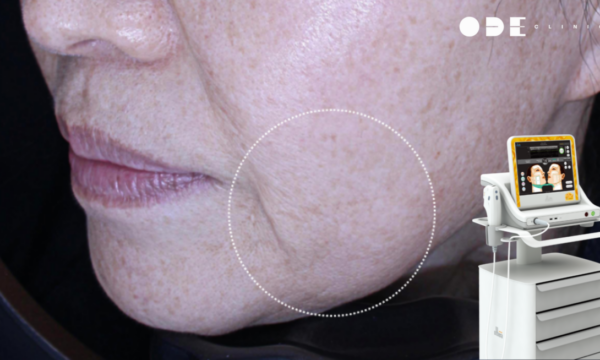
Lifting
Does Ultherapy Really Work for Jowls? What You Need to Know
Many patients believe that Ultherapy can lift every part of the face equally.In reality, however, there are certain areas where Ultherapy has clear limitations.Today, we’ll focus on one of the most common concerns: jowls, also known as sagging lower cheeks.ODE Clinic UltherapyUpdated: April 25, 2026By: Dr. Do-hoon Kim, Director of ODE ClinicThe Principle of UltherapyUltherapy uses High-Intensity Focused Ultrasound (HIFU) to concentrate ultrasound energy into a precise point. This creates instant thermal coagulation in the tissue, which then triggers contraction and tightening.The device creates thermal coagulation points at depths of 3.0mm and 4.5mm,mainly targeting the SMAS layer and the subcutaneous fat layer.Because of this mechanism, Ultherapy is commonly used to improve sagging along the jawline.Why Ultherapy Has Limitations for JowlsThe biggest difference between Ultherapy and radiofrequency treatments isthat Ultherapy delivers energy into a single focused point.This allows for strong contraction, but it also means the risk of nerve irritation or damage must be carefully considered.One of the most important nerves in this area is the marginal mandibular nerve, which runs near the jawline.<Course of the marginal mandibular nerve>This nerve travels relatively deep beneath the SMAS layer on the outer side of the face.However, as it approaches the mouth area, it becomes more superficial.This superficial region overlaps with the area around the marionette lines, which form the inner border of the jowls.For this reason, the marionette line area is marked as a no-treatment zone on the Ultherapy device screen.If the marginal mandibular nerve is damaged during treatment,patients may experience temporary facial asymmetry for about 1 to 2 months.Symptoms can include an uneven smile or water leaking from the mouth while brushing teeth or drinking through a straw.<Ultherapy Side Effects: Nerve Damage>Strategic Approach for Jowls and Marionette LinesBased on facial anatomy, I do not recommend relying on a single treatment for jowls and marionette lines.Instead, a multi-modal strategy is usually more effective.(1) Lipolysis: Fat ReductionThe first step is reducing the volume of sagging fat tissue.This can be done with HIFU treatments, including Ultherapy, or with devices that have fat-reduction effects,such as InMode or Onda Lifting.Deoxycholic acid-based injections, such as V-Olet or Wonder V,may also help by inducing adipocyte, or fat cell, death.(2) Retinacula Cutis Tightening: Ligament Contraction(Source: The Surgical Anatomy of the Jowl and the Mandibular Ligament Reassessed)This is one of the key points I consider very important.By using deep-reaching RF treatments such as XERF, heat energy can be delivered across a wider and deeper area.This helps induce tightening of the retaining ligament system, which plays an important role in supporting the lower face.For patients whose marionette lines are not yet deeply etched,combining fat reduction and retaining ligament tightening can already create a noticeable improvement.<Ultherapy and XERF, 2 weeks after treatment>ODE Clinic XERF(3) DAO Botulinum Toxin: Corner of Mouth BotoxAs we age, the DAO, or depressor anguli oris muscle, often becomes stronger.This is the muscle that pulls the corners of the mouth downward.When the DAO is shortened or maintains high muscle tone,the step-off around the marionette line can become more obvious.By injecting Botox into the DAO, we can weaken the downward pull of this muscle.As a result, the marionette line can appear softer and less pronounced.(4) FillersAging-related resorption of the mandibular bone can also make marionette lines appear deeper.By using fillers to subtly restore the lost volume in the lower face, the height difference across the wrinkle line can be reduced.This can help soften the appearance of the marionette line and improve the overall jowl contour.Final ThoughtsIn my experience,jowls and marionette lines respond best to a customized combination of treatmentsrather than repeatedly performing one single procedure.Ultherapy can certainly help in selected areas,but because the jowl region is closely related to important nerve pathways,it is not a place where more shots automatically mean better results.For the safest and most effective outcome,I recommend choosing a clinic where an experienced doctor evaluates your facial anatomy directlyand designs a treatment plan based on an accurate diagnosis.This has been Dr. Do-hoon Kim from ODE Clinic.Gangnam Dermatology Clinic, ODE Clinic8th Floor, 340 Gangnam-daero, Gangnam-gu, Seoul, Korea+82–2–569–0222ODE Column : Ultherapy Jowl TreatementAuthor: Dr. Dohoon Kim, Chief Director of ODE ClinicSpecialty: Anti-aging (Lifting, Volumizing, etc.)
2026.06.17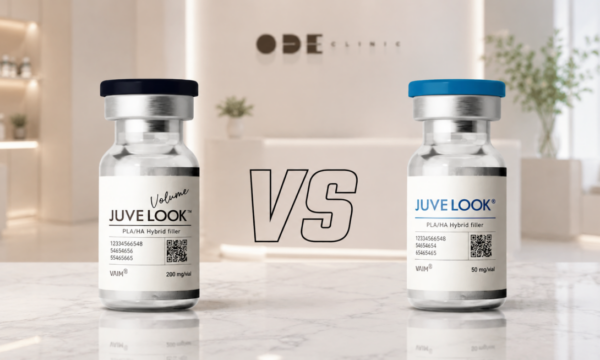
Volume
Juvelook Skin vs. Juvelook Volume: Which Treatment Is Right for You?
Many patients confuse Juvelook Skin Booster with Juvelook Volume because the names sound similar.However, the two treatments are designed for very different purposes.Simply put, Juvelook Volume is used to restore volume in hollow areas such as the cheeks and nasolabial folds, helping improve facial contours.Juvelook Skin Booster, on the other hand, focuses on improving skin quality, including texture, fine lines, pores, and acne scars.Based on my clinical experience, I’ll explain the differences between these two products in detail.Product ComparisonFeatureJuvelook SkinJuvelook VolumePDLLA Content30mg170mgInjection LayerDermisSubcutaneous LayerInjection MethodManual injection / MirajetCannulaPrimary GoalsSkin texture, fine lines, pores, scarsSunken cheeks, nasolabial folds, volume restorationODE Juvelook VolumeODE Juvelook Skin1. Difference in Purpose and Particle SizeJuvelook Skin contains smaller particles and a lower PDLLA concentration, with 30mg per vial.Because the particles are smaller, Juvelook Skin can be injected into the dermal layer.Once placed in the dermis, it stimulates collagen synthesis and helps make the skin firmer, smoother, and more refined.It is especially well known for improving skin texture and enlarged pores.Juvelook Volume, in contrast, contains larger particles and a much higher PDLLA concentration, with 170mg per vial.Because of the larger particle size,injecting Juvelook Volume into the dermis can increase the risk of excessive collagen formation and nodule development.For this reason, Juvelook Volume is designed to be injected into the subcutaneous layer, below the dermis.Its higher concentration allows it to stimulate more collagen production,making it more suitable for restoring lost facial volume rather than improving surface skin texture.2. Real Patient Results: Before & After(1) Juvelook Skin BoosterBefore: 2025.09.20 / After: 2026.01.19In this case, Juvelook Skin Booster was delivered precisely into the dermal layer using the Mirajet device.After three sessions, the patient showed improvement not only in overall skin texture and pores, but also in acne scars.(2) Juvelook VolumeBefore: 2023.10.30 / After: 2025.05.13This patient received three sessions of Juvelook Volume to improve sunken cheeks.Juvelook Volume can stimulate collagen synthesis and adipocyte, or fat cell, proliferation for up to 24 months after treatment.Once volume is established, the result can last for more than two years.3. Juvelook Skin vs. Rejuran HealerJuvelook Skin works by inducing collagen synthesis and remodeling the structure of the dermis.Think of it like rebuilding a weakened house: reinforcing the pillars and adding new concrete to strengthen the structure.In this sense, Juvelook Skin is a skin booster focused on structural concerns such as pores, uneven texture, and acne scars.Rejuran Healer, on the other hand, is based on PN, or polynucleotide, extracted from salmon DNA.Its main focus is repairing the damaged skin barrier and supporting skin regeneration.For this reason, Rejuran Healer is often helpful for sensitive skin, redness, dryness, and rough, weakened skin.The most important step is to accurately diagnose your current skin condition and choose a treatment that targets the specific issue you want to improve.4. Juvelook Volume vs. Dermal FillersJuvelook Volume takes time to show visible results because it depends on natural collagen production. In most cases, it is performed about three times at one-month intervals.Another point to understand is that the amount of collagen produced can vary from person to person.If collagen production is limited, the effect may feel subtle. If collagen is produced excessively, firm nodules may develop.However, once volume is created, Juvelook Volume has several advantages.The result lasts a long time, the foreign body sensation is minimal, and the outcome tends to look very natural.Hyaluronic acid fillers, by contrast, create volume immediately after injection.They are also easy to shape according to the treatment area and the patient’s desired outcome.However, because fillers directly occupy space under the skin, some patients may feel a foreign body sensation. Their longevity is usually around one year, which means repeat treatments may be needed more often.Rather than asking which treatment is always better,it is more important to choose the option that best matches your facial structure, treatment goal, and tolerance for maintenance.FeatureJuvelook VolumeDermal FillersRecommended AreasSunken cheeks, nasolabial foldsAll facial areasOnset of ResultsTakes several monthsImmediateLongevity2+ yearsAround 1 yearPotential Side EffectsNodulesForeign body sensation, vascular occlusion5. ConclusionIf your main concern is dull skin, enlarged pores, fine lines, or rough texture,Juvelook Skin may be the better choice.If your face looks hollow, tired, or deflated, and you want to restore volume to areas such as the cheeks or nasolabial folds,Juvelook Volume may be more appropriate.Although the names are similar, the treatment goals are very different.The best way to decide which treatment is right for you is through a detailed consultation with an experienced physician who can evaluate both your skin quality and facial volume.Gangnam Dermatology Clinic, ODE Clinic8th Floor, 340 Gangnam-daero, Gangnam-gu, Seoul, Korea+82–2–569–0222ODE Column : Juvelook Volume vs. Juvelook SkinAuthor: Dr. Dohoon Kim, Chief Director of ODE ClinicSpecialty: Anti-aging (Lifting, Volumizing, etc.)
2026.06.16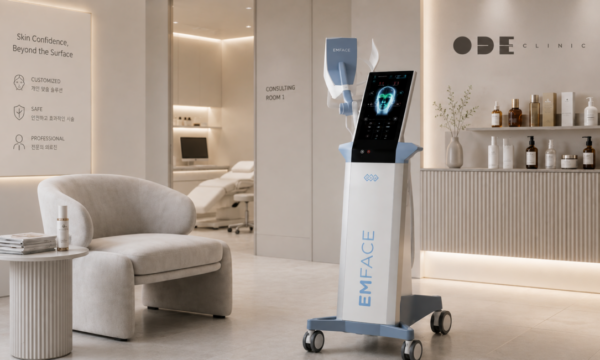
Lifting
EMFACE Treatment Reviews: Cost, Before & After, and How Long Results Last
Unlike conventional lifting devices that create tissue contraction and remodeling mainly through thermal energy,EMFACE works in a very different way.It is a next-generation lifting treatment that improves the muscle tone of sagging facial muscles,helping restore upward support in the face.Today, we’ll go over the actual lifting effects of EMFACE, its cost, treatment reviews, and how long the results typically last.ODE EmfaceLast Updated: April 21, 2026Author: Dr. Do-hoon Kim, Director of ODE ClinicThe Efficacy of EMFACEThe Science Behind EMFACEEMFACE creates its lifting effect through two main mechanisms.(1) HIFES: High-Intensity Facial Electromagnetic StimulationAs we age, the natural tone of facial muscles gradually decreases.When muscle tone weakens, the muscles remain more relaxed and elongated even at rest, which contributes to a sagging appearance.Traditional lifting procedures such as Ultherapy and Thermage mainly focus on contraction of the skin,retaining ligaments, subcutaneous fat, and the SMAS layer.EMFACE, on the other hand, directly targets the underlying facial muscles.The face contains both elevator muscles, which pull tissues upward, and depressor muscles, which pull tissues downward.EMFACE uses high-intensity electromagnetic stimulation to selectively strengthen the muscles responsible for lifting.The applicator patches deliver powerful stimulation that forces the muscles to contract at supramaximal intensities—far beyond what can be achieved through voluntary facial exercises.As a result, the tone of the Frontalis muscle in the forehead,the Zygomaticus major and minor muscles in the cheeks,and the Risorius near the corners of the mouth is improved.This helps strengthen the upward support system of the face.Target Areas:Brows and eyelids, nasolabial folds, mid-face volume, and corners of the mouth.[Clinical Proven Results]Source: https://pubmed.ncbi.nlm.nih.gov/38235951/Average lifting effect:16.5% after 1 month22.2% after 3 monthsMid-face volume:Average increase of 1.27ml in the upper cheek area(2) RF: RadiofrequencyIn addition to electromagnetic stimulation, EMFACE also delivers synchronized RF energy, similar in concept to devices such as Thermage or Density.EMFACE operates at a 3.2MHz frequency, which allows heat to be delivered deeper than many standard RF tightening devices.Rather than focusing only on superficial skin tightening, the purpose of EMFACE RF is to target deeper support structures such as the retaining ligaments and SMAS layer, helping maximize the lifting effect.FeatureThermage / DensityEMFACEFrequency6.78 MHz3.2 MHzPrimary GoalDermal Tightening / Wrinkle ReductionLifting / Sagging CorrectionWho is EMFACE for?EMFACE may be a good option for:Patients who want improvement in nasolabial folds and mid-face volumePatients who have already tried Ultherapy but want additional lifting synergyThose looking for a comfortable treatment with minimal pain and virtually no downtimePatients preparing for major events, such as weddings, who want natural-looking facial expression and subtle liftingWho should consider other options?EMFACE may not be the best first choice for:Patients who want a one-time treatment because they cannot visit frequentlyThose whose main concern is the jawline or V-line rather than the brows or mid-faceIn these cases, treatments such as Ultherapy may be more suitable.Maintenance, Treatment Cycle, and PricingEMFACE works by repeatedly forcing muscle contractions to build tone.Because of this, it is not designed as a single-session treatment.Recommended Protocol:A basic course usually consists of 4 to 6 sessions, spaced 7 to 10 days apart.A single session alone is unlikely to create a significant visible change.Pricing:On average, a 4-session package costs approximately 2 to 3 million KRW,though the exact price may vary depending on the clinic.EMFACE is a premium treatment, with pricing similar to a full Ultherapy or Thermage procedure.Therefore, it should not be considered a low-cost lifting option.Duration:Results vary by individual, but after a full 4-session course, the effect typically lasts around 9 to 12 months.Frequently Asked QuestionsQ. How is EMFACE different from doing facial muscle exercises at home?A. EMFACE HIFES induces contractions that are much stronger than what a person can voluntarily create.In addition, the integrated RF energy helps stimulate collagen and elastin regeneration, which is not something ordinary facial exercises can provide.Facial exercises also have limitations. When you intentionally tense your face, you may activate unwanted muscles, such as the muscles between the brows, which can worsen expression lines. EMFACE is different because it selectively targets the muscles needed for lifting.Q. When will I start seeing results?A. On average, lifting effects continue to develop for 2 to 3 months after completing the 4th session.Q. Are there any side effects?A. In rare cases, if a patch partially detaches during treatment, RF energy may concentrate in one area. This can lead to mild burns or small blisters.However, this is uncommon when the treatment is performed carefully by an experienced clinic.Q. What about pain and downtime?A. EMFACE is virtually painless for most patients.Aside from temporary redness immediately after the session, there is almost no downtime. Most patients can return to their normal daily routine right away.Closing ThoughtsEMFACE is not just another heat-based lifting device.Its key difference is that it improves the tone of facial muscles, helping restore the natural upward support of the face.It can be especially useful for concerns such as drooping brows, mid-face sagging, nasolabial folds, and lowered mouth corners.That said, EMFACE is not a one-and-done procedure.It is best understood as a program-based lifting treatment that builds results gradually through repeated sessions.If your main concern is the mid-face and natural-looking lifting with minimal downtime, EMFACE may be a very good option.If your concern is mostly the jawline or V-line, another lifting treatment such as Ultherapy may be more appropriate.Rather than deciding based only on the device name, I recommend consulting with a clinic that understands EMFACE, Ultherapy, and RF lifting devices together, so your treatment plan can be designed according to your facial structure and goals.This has been Dr. Do-hoon Kim from ODE Clinic.Gangnam Dermatology Clinic, ODE Clinic8th Floor, 340 Gangnam-daero, Gangnam-gu, Seoul, Korea+82–2–569–0222ODE Column : EmfaceAuthor: Dr. Dohoon Kim, Chief Director of ODE ClinicSpecialty: Anti-aging (Lifting, Volumizing, etc.)
2026.06.16


Blog

Youtube

